


How Barnum Got Its Name:
Guy Percy Barnum, after serving in the
Civil War, came west as a scout with the U.S. Army. He eventually came
to what is now the Barnum area west of Kaycee and was smitten. He
returned with his wife, Frances (Fannie), her piano, and his
half-brother, Tom Freeguard. They homesteaded and received a government
contract to operate a post office in their home in 1897. It became known
as the Barnum Post Office, and the community that grew up in that area
was called Barnum. There are no Barnums there today, but the name
endures.
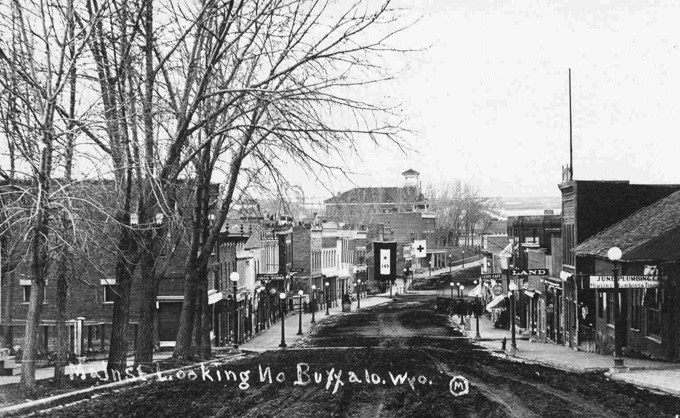
HOW BUFFALO'S MAIN STREET GOT ITS CURVE
(Sources: Various Buffalo
Bulletin articles; submitted by Kari)
There are several legends
about the curve to Buffalo's main street. One is that the street follows
an old Buffalo trail. Here is another. This story is taken from an
article written in the Buffalo Bulletin-Heritage Edition-1999.
In
1879, Ft McKinney was just established on Clear Creek about 3 miles west
of Buffalo and J. H. Conrad had opened a general merchandise store in
what was soon to become the thriving little town of Buffalo. Conrad
naturally wanted a road or trail past his store as an extra convenience
for his customers. That same year, George Washbaugh was employed by a
Mr. Powell, who operated a string of bull teams, freighting between Ft
Laramie, WY and Ft McKinney, along the Bozeman Trail. Washbaugh was
foreman of the freighting outfit.
On one of George's trips to Ft
McKinney, he received word from J. H. Conrad that if he would bring down
one of his bull strings and make a road past his place of business, he
(Conrad) would give him a suit of clothes. Washbaugh came down with a
string of ten oxen and three heavy freight wagons and made the trail
desired by Conrad, collecting the new suit in payment. It is logical and
evident that the oxen, following the natural grade of the hills, leading
into and out of Clear Creek, made a very crooked trail. So it would seem
that it was no particular fault of man, but just a string of oxen that
were trying to keep things on the level that made Buffalo's Main Street
so crooked.
The town site was located shortly thereafter and everyone
apparently settled down along the trail made by Washbaugh and his oxen
and it appears no effort was ever made to straighten out the street.
Buildings began to spring up and as they did, they followed the contour
of the old trail.


 On
March 3, 1884 the city of Buffalo was incorporated
On
March 3, 1884 the city of Buffalo was incorporated
 About 1920

 About 1930


Jim Gatchell Museum Jim Gatchell Museum Schoolhouse Display

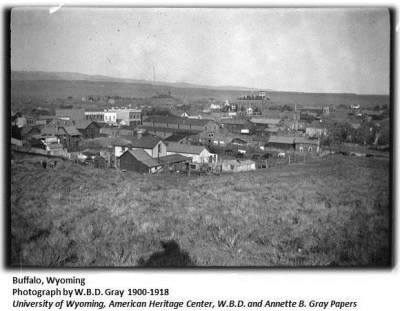
Buffalo Wyoming late 1890's looking over the town towards the west from the hill above town. Courthouse is on the left, the old flour mill is on the far right.
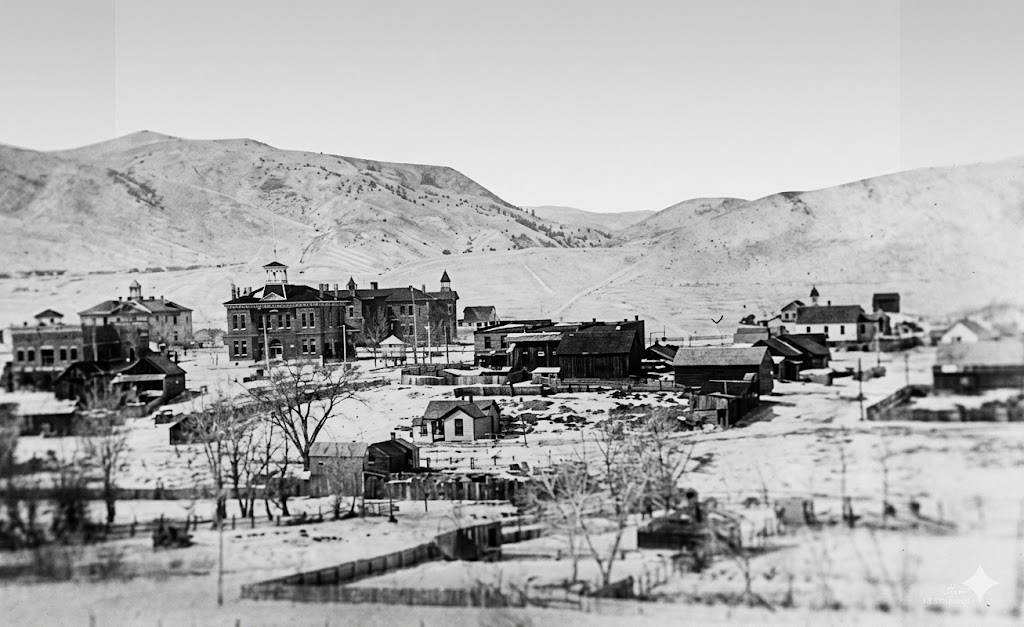
City Hall, White School, Courthouse, Brick School all included plus the Methodist Church. No date provided.
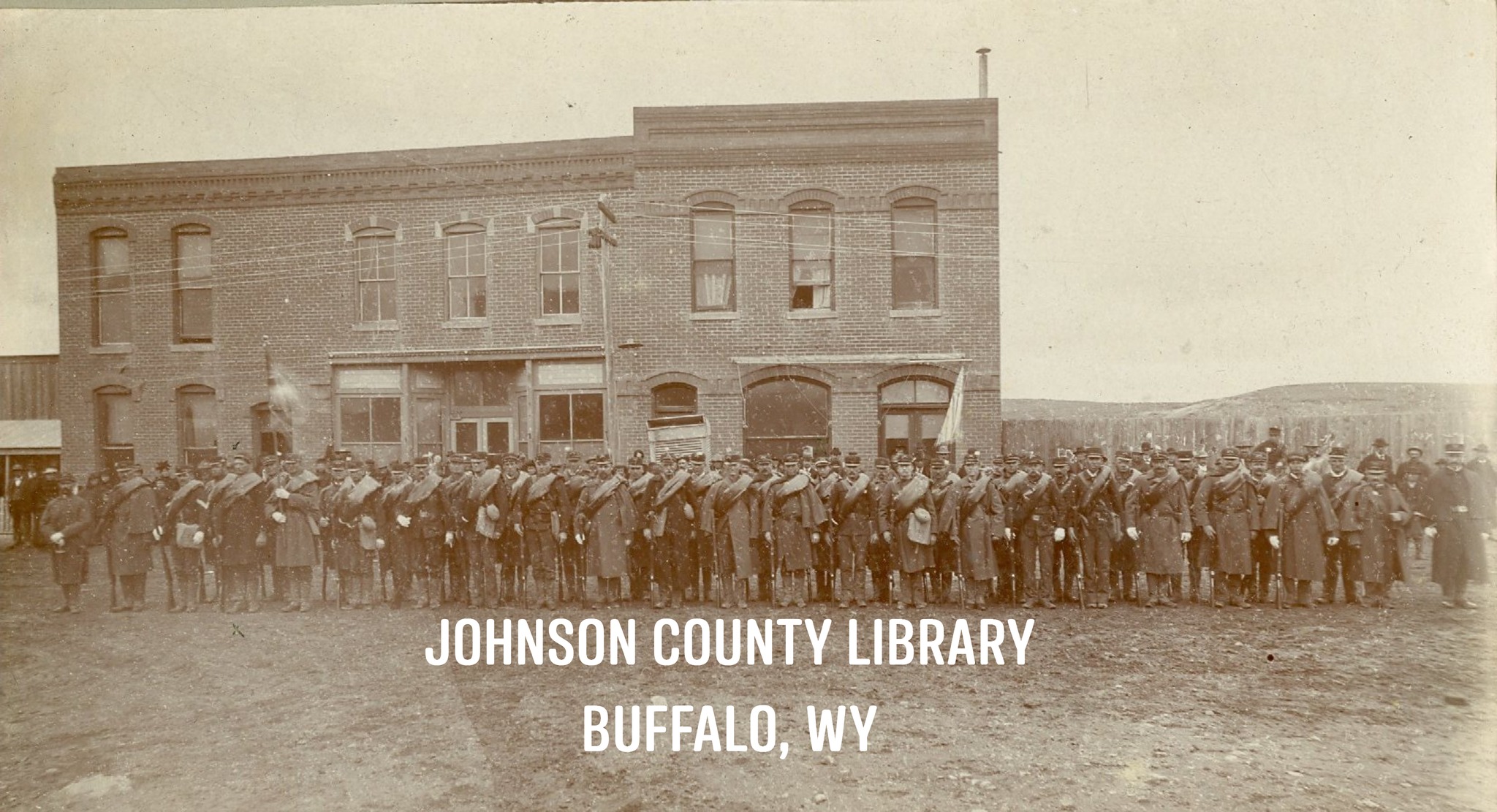
Here is the building that currently holds the tea shop, etc. This is
a very old building for Buffalo. Soldiers leaving for service in the
Spanish American War 1898 Company "C" Buffalo, WY are in front of the
building. From a site survey in our archives, we find the building was
built by Charles Burritt for his law office in the 1880s. Burritt is
probably in the photo as he was a soldier who left to serve in the
Philippines during the Spanish American War.
The Sanborn map states
it was a dwelling in 1912. Other businesses located in the building have
been, Germania, a German restaurant run by the Fischer family who had a
brewery, an electric supply company, a tent and awning company, a title
office, power company office, Hubbards, Buffalo Federal Savings & Loan
(1940s), upstairs apartments, etc.
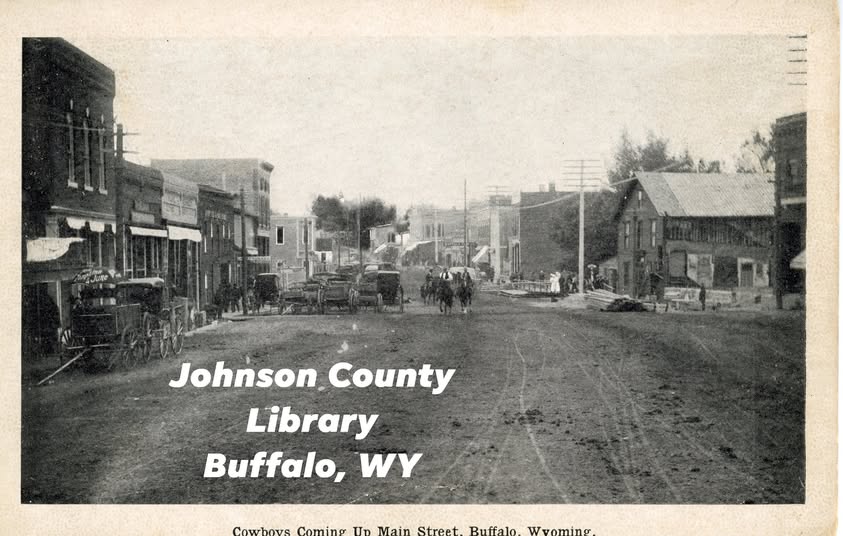
Postcard of Buffalo
Buffalo Flour Mill / Fish Brewery and Lott Mansion
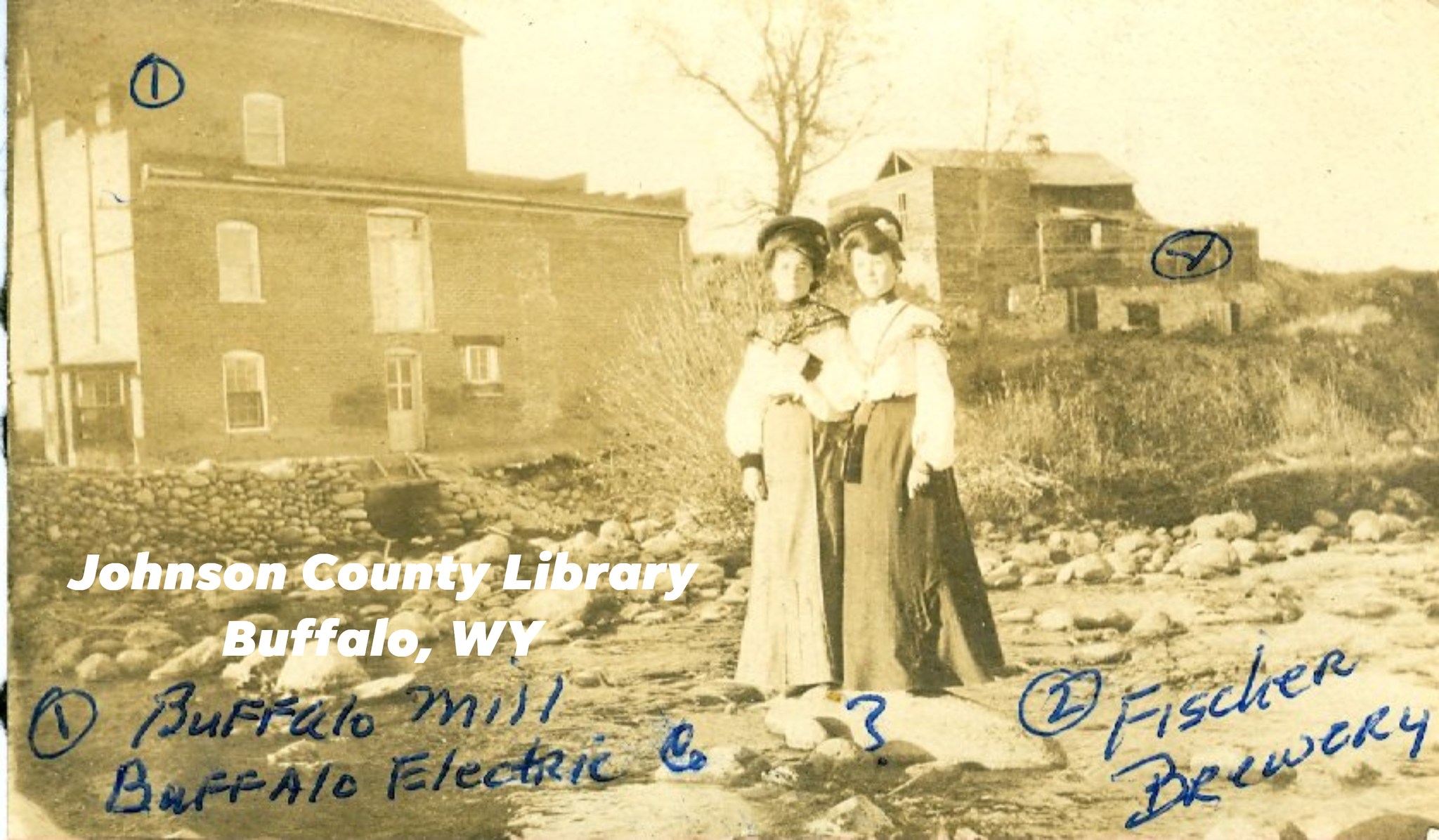
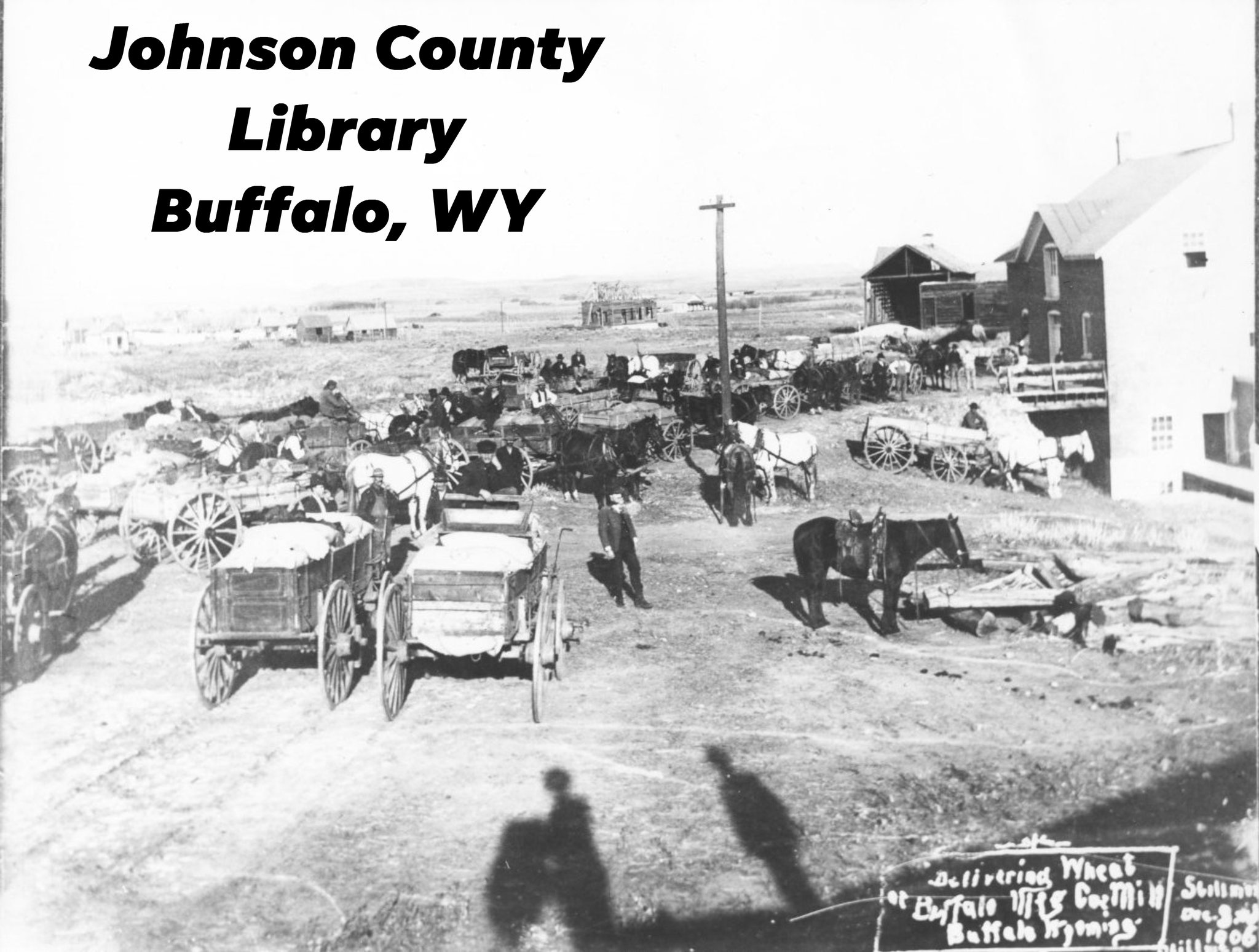
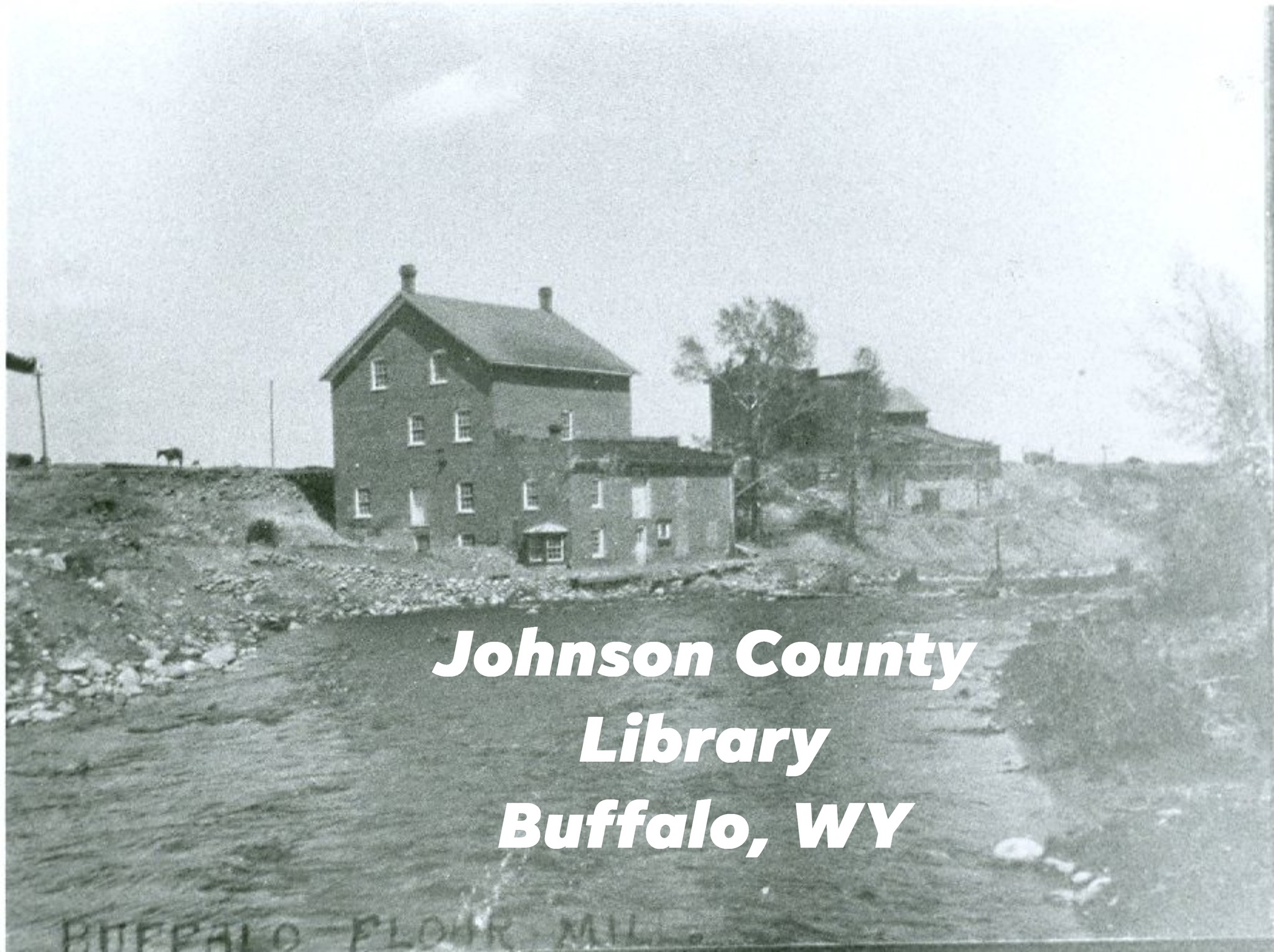
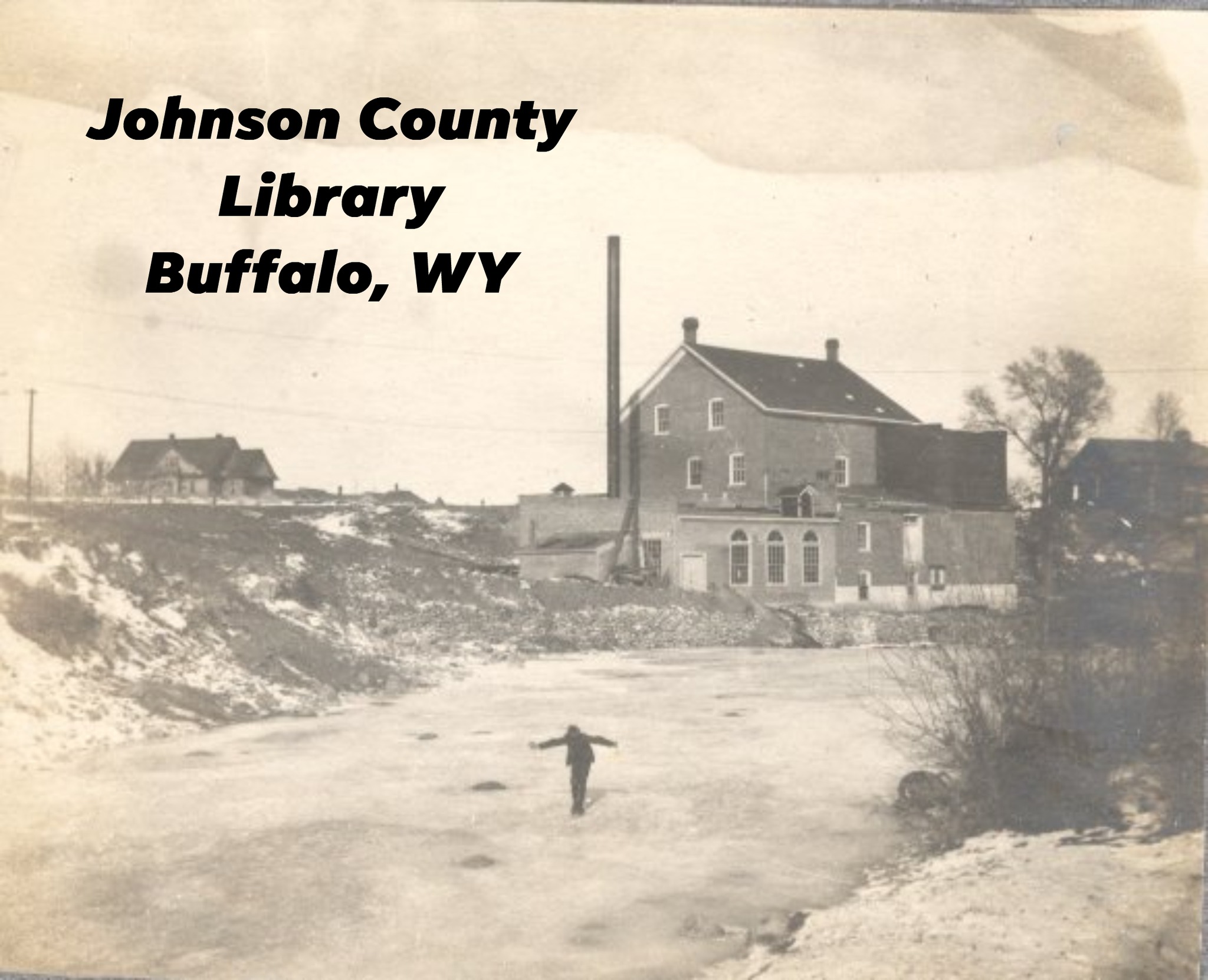
Lott Mansion in the background
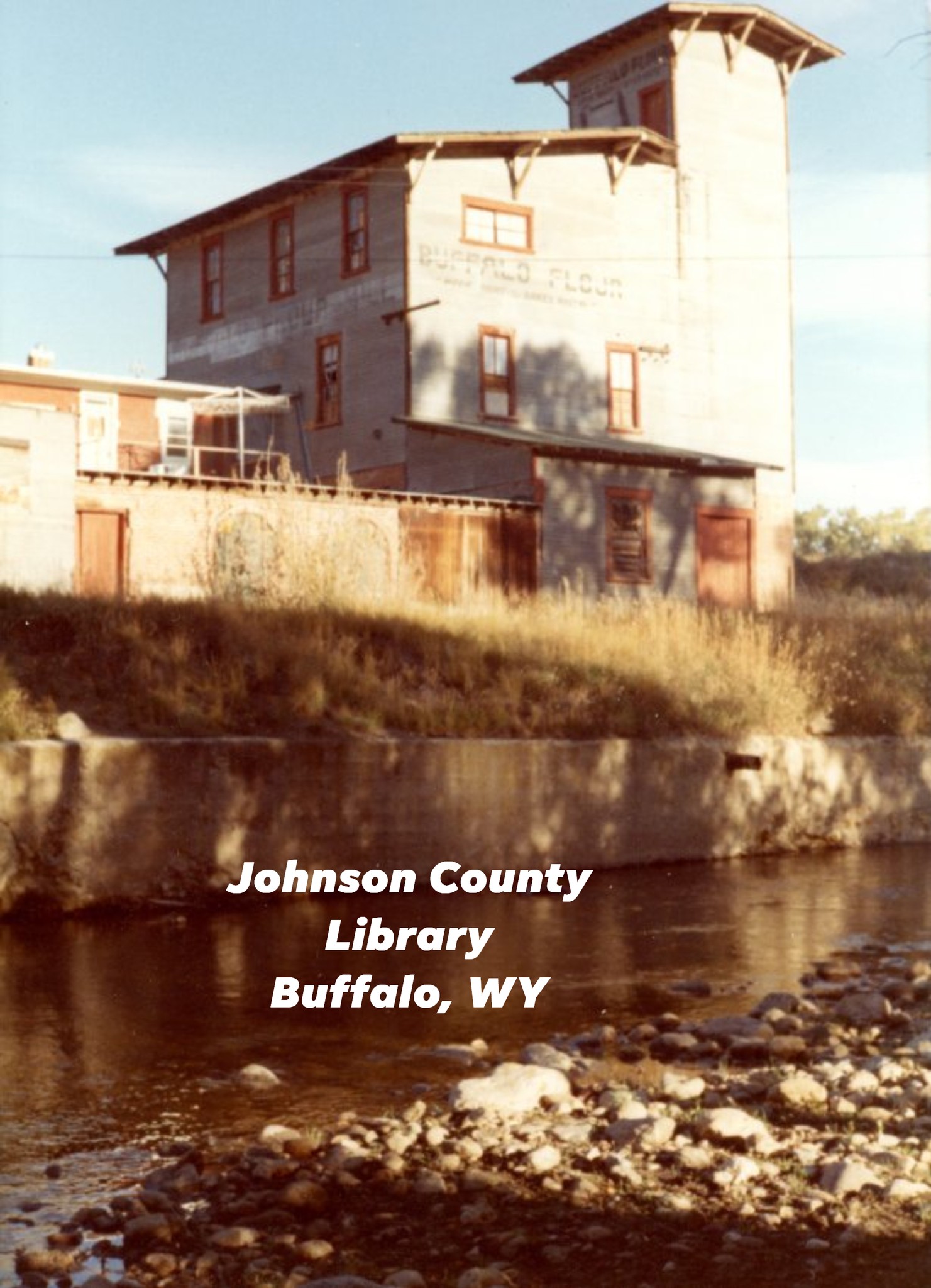
Buffalo Flour Mill/Buffalo Manufacturing Company and Fischer's Brewery in background.
Flour Mill building torn down in 1975.
MEMOIRS OF BUFFALO, WY
Buffalo Ancient Cow Town A Wyoming Saga by
Burton S. Hill
-available for checkout at the library...
Buffalo
began to appear along Clear Creek during the late spring of 1879 in the
nature of a civilian adjunct to the uncompleted Fort McKinney on the
mesa three miles westward in Wyoming Territory. On July 18, 1878,
Captain Edwin Pollock of the 9th U.S. Infantry had laid out and started
construction on the new fort designed to protect emigrants on the nearby
Bozeman Trail. Contracts had been let to a number of civilians to
provide forage from the adjoining valleys for the post livestock, and
these contractors established their camps along Clear Creek where
Buffalo now stands. Soon this brought tradesmen and merchants to serve
these workers, as well as beer halls and saloons where liquor could be
bought and enjoyed on the premises. The new town was just off the
military reservation which made for a greater license than would be
allowed near the post. This situation was quickly taken advantage of.
While the new town soon gained considerable prominence along the
trail, the spot where it stood, and the environs, were well known long
before. Just east of the mouth of Clear Creek Canyon with the tall and
shining Big Horns rising to the immediate west, the locality had long
been a favorite one. First the Indian tribes and later the early day
white explorers and trappers found their way there to rest and enjoy the
clear cold water of the creek, the shade trees, and the wide valley
abounding with game of all kinds.
Prior to the time white men made
their appearance, the Sioux called Clear Creek Tu Shu Wakpala, meaning
Lodge Pole Creek, and it went by the latter name until some of the first
explorers commenced calling it Clear Fork, and pronounced it the largest
tributary of Powder River, which it still is. One of the first of these
explorers was Wilson Price Hunt, who, on August 31, 1811, made his camp
on the flat just west of where Buffalo now stands.
By Kari
JIM GATCHELL MUSEUM
When I was growing up, I spent
much time at the museum, going through the different displays. I
especially remember the dioramas done in miniature of historical events
such as the Fetterman Battle, the Wagon Box Fight and Ft Phil Kearney.
They were so lifelike and have left a lasting impression on me. The
displays of the Indian items were very vivid, also. There were also huge
collections of arrow points, period clothing and head dresses. When I
would go arrowhead hunting and find something, I would compare my finds
with what was in the museum.
Today, I still go in and view the many
new things they have added and make my own donations for others to
share.
LIBRARY
I spent much time at the Johnson County
Library in Buffalo. The rule in our family was that all us kids had to
be at the library by 4:30, so Dad could pick us up and take us up the
mountain after school and there were NO excuses. I remember my brother,
Steph got yelled at seriously because he was a little late. It turned
out Steph had ball practice and Dad forgot! You could tell Dad wanted to
say sorry, but that wasn't Dad's way back then!
The library was this
wonderful place for me where I could escape into fantasy. I think girls
do that a lot! I loved mysteries and Tarzan! And I read every book the
library had on those. Nancy Drew-the Hardy Boys-Tarzan. Everything was
right with the world if I have one of those to read.
The library was
old...to me. It had wide plank pine floors and old shelves-very high-and
oak tables and chairs and smelled old. Now that I am old, I appreciate
pine planking with a lot of patena and rich dark shelving with a lot of
patena. And the building itself...oh, it must have been-and still is-an
architectural prize. It is of red brick-very large brick-I wonder if it
was made at the fort? And the north side of the building has a turret. I
can't describe it well enough. It was one of my favorite buildings, even
as a child.
Now, the Museum has annexed it and it has changed
tremendously. Gone are the old plank floors and old walls. Even the
smell is different. It has been converted to the museum gift shop.
OUTDOOR SWIMMING POOL
Ah...hot summer days and the city pool.
What could be better. The pool is fed from Clear Creek, which runs right
down through the center of town. When I was a kid, the pool was just
this big-and I mean big-concrete lined square and a dirt bottom. On the
north side were the dressing rooms, which were rough logs chinked just
like all log buildings were chinked and the trim was always painted a
bright blue, if memory serves me correct. On the northeast corner of the
pool was a huge diving tower. It had two levels to jump from and if you
were ‘cool' you always jumped from the top level. Goodness, it was
high in the sky when I was a tyke. The first time I jumped off that
level I thought I would never get back up above water. That end down
there was very deep.
Across from the pool, there is a band shell and
it still has great acoustics even today. There is what we called back in
the day the baby pool, which was made of the same concrete material and
had a fountain in the center of it and all the little ones spent their
time there. Swing sets and tennis courts made up to rest of the park
area and my brother and I spent all our summer days in that park.
Today, they have changed the pool. It is still the same monster size,
but sports a new kind of wall and it is painted bright blue. And it also
has a floor, which is also painted blue. And it is still the same kind
of magnet for the young and old as it was in my day.
CHRISTMAS IN
BUFFALO
There is NO town in America like Buffalo at Christmas
time. When I was a kid, oh, my Goodness, Buffalo went all out for the
season. It's not called the City of Lights for nothing!!! The full
length of main street was lined on both sides with lighted Christmas
trees and there were lights strung over the street. The huge pine trees
on the courthouse lawn were lighted from top to bottom and you could see
them for miles. Those trees had to be 50-70' high. And Buffalo always
had snow at Christmas time..
I remember going from store to store
singing Christmas carols the last week before Christmas and our church
group would go house to house in some neighborhoods singing carols. One
of the old ranchers would bring his team of horses and his wagons into
town and we would have hay rides down main street. It was truly a winter
wonderland.
Dad always took us kids tree hunting in the mountains. We
would spend the day looking for just the perfect tree and always came
home with it, cold and wet and hungry. Mom would have a fire going in
the fireplace, and hot cocoa and popcorn ready for us when we got home.
When I grew up and had a family of my own, I kept those memories alive
while I was still in Buffalo, but then, I moved to this big city and
Christmas has never been the same. City folk don't celebrate the same
way or feel the same way about all the trappings of the season. So now,
Christmas in Buffalo is only in my heart.
SPRING FLOWERS
The spring flowers in the Big Horn Mountains are some of the most
beautiful flowers known to man-of course, there is no bias in that
statement! Because I was raised west of Buffalo and spent the majority
of my life on the back of a horse exploring all the mountains that
surrounded me, I was privy to the early show of purples from the lupine,
the yellows of the balsam roots, the hot pinks of the fire weed, the red
of the Indian paintbrush and the list goes on. The hills outside my
bedroom window were carpeted in purple with splashes of yellow. The
aspen groves sang their song in the breeze and the paintbrush peeked
through the tall grasses. The air was crisp and fresh and carried some
many scents. And all I had to do was look to the west to see the glacier
on the top of the peaks...how blue the sky was...how white snow
was...how purple the lupine was. How truly blessed I was to live in that
wonderous area.
The Kaycee Post Office was established on January 27, 1898 with first postmaster George Kaltenbach. The first application was turned down because it was presented as the letters K. C. and the postal service stated the name needed to be spelled out to be accepted. Some post office history. The Powder River Post Office was established on May 22, 1879 (in what was Pease County) with first postmaster Richard Trevion. After October 17, 1895 the name was changed to the Sussex Post Office beginning on October 18. 1895 with first postmaster Henry W. Davis. It operated until May 24, 1963. Henry W. Davis was known as Hard Winter Davis. Not sure how he got that nickname but think it was of being a cattle rancher on Powder River
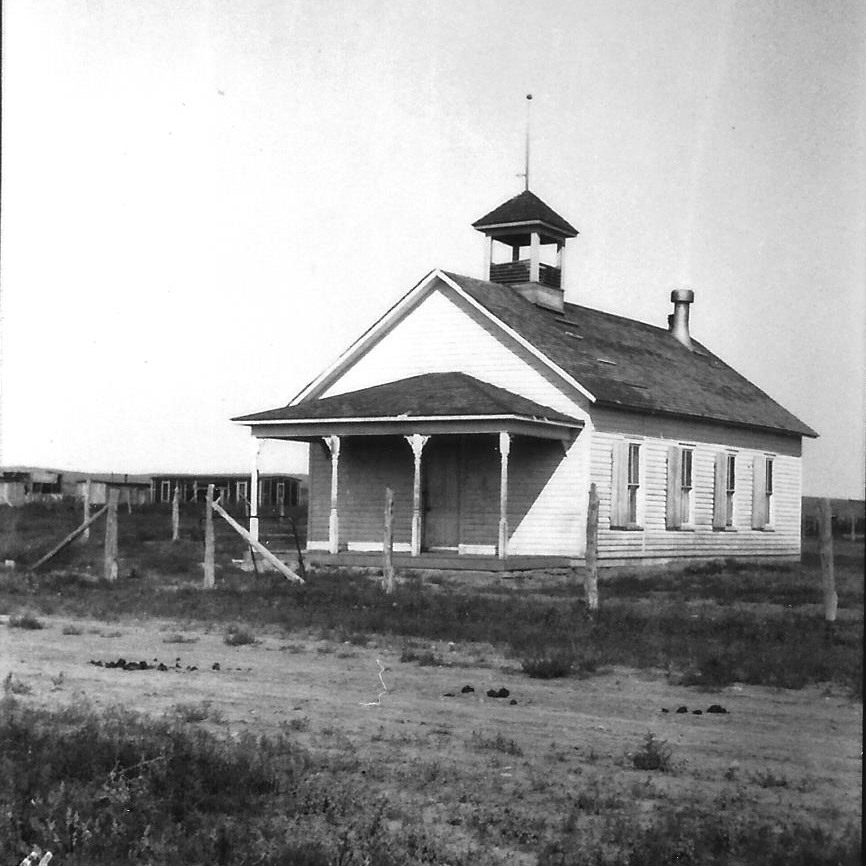
On Feb 10 in 1918, the Methodist Church was organized in Kaycee. At first, services were held in the building in the first photo, which was also used as a schoolhouse (the 2nd one in Kaycee). However, that building was purchased and moved elsewhere by the Methodists, so services were held on the upper floor of what was known as Bailey Hall. Rent of $10 per month was paid to Mr. Bailey. In 1930, another building was obtained from the Continental Oil Company in Midwest for free, but they had to fill in the hole after moving. The church paid $300 to have it moved to Kaycee, to the site it presently stands.
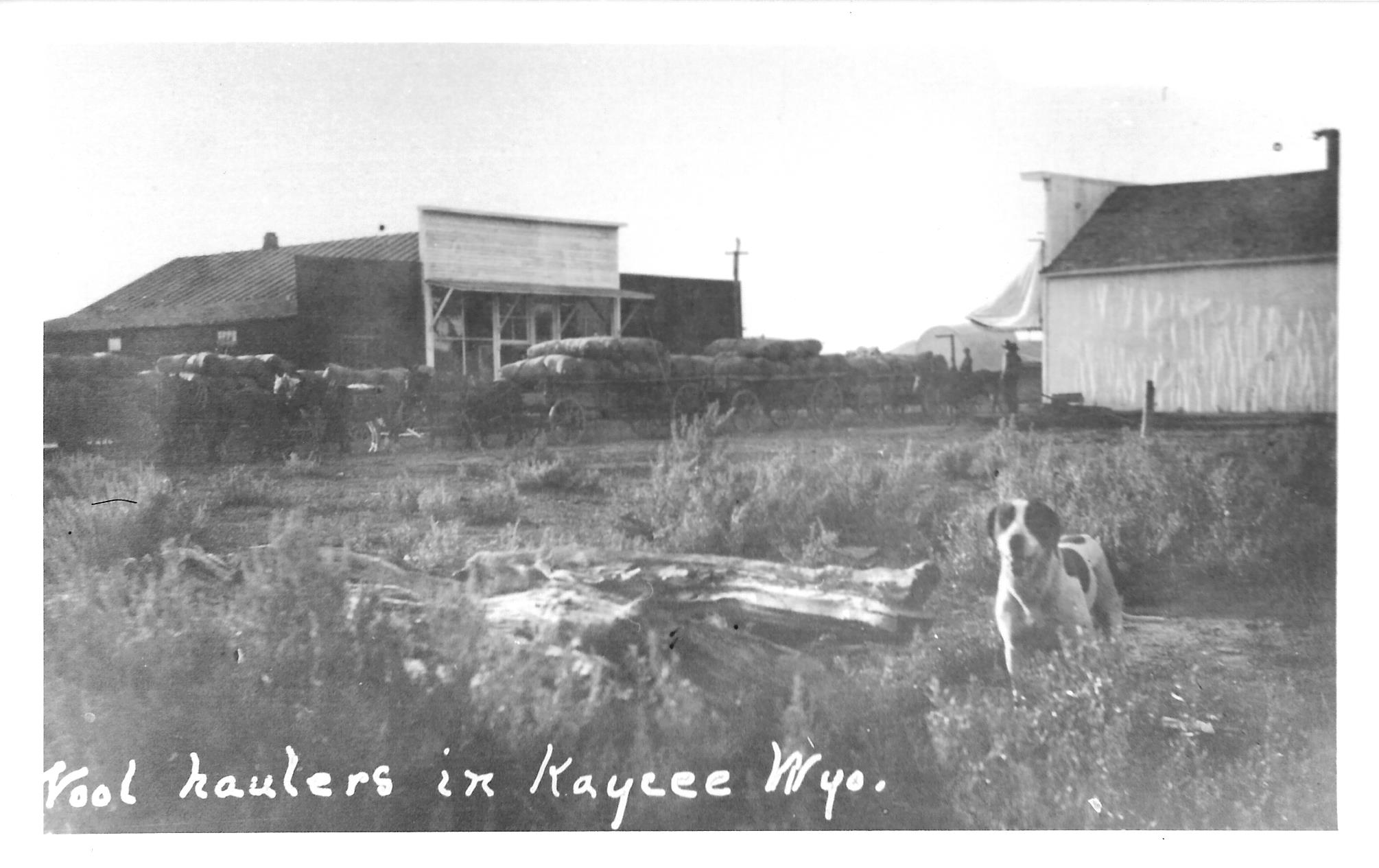
A load of wool in front of the Powder River Commercial Co. (currently the museum) around 1901.

Kaycee Wyoming 1902

Modern Day Kaycee WY

1914 Picture of Kaycee Mercantile. Bill Stubbs and Alice Ullery Stubbs owned the Kaycee Mercantile in early 1920‘s. Samuel and Clara Ullery resided in the lean-to on the north side of the building for a short time while they filed on their homestead at Nine Mile. This is now the Hoofprints of the past Museum.
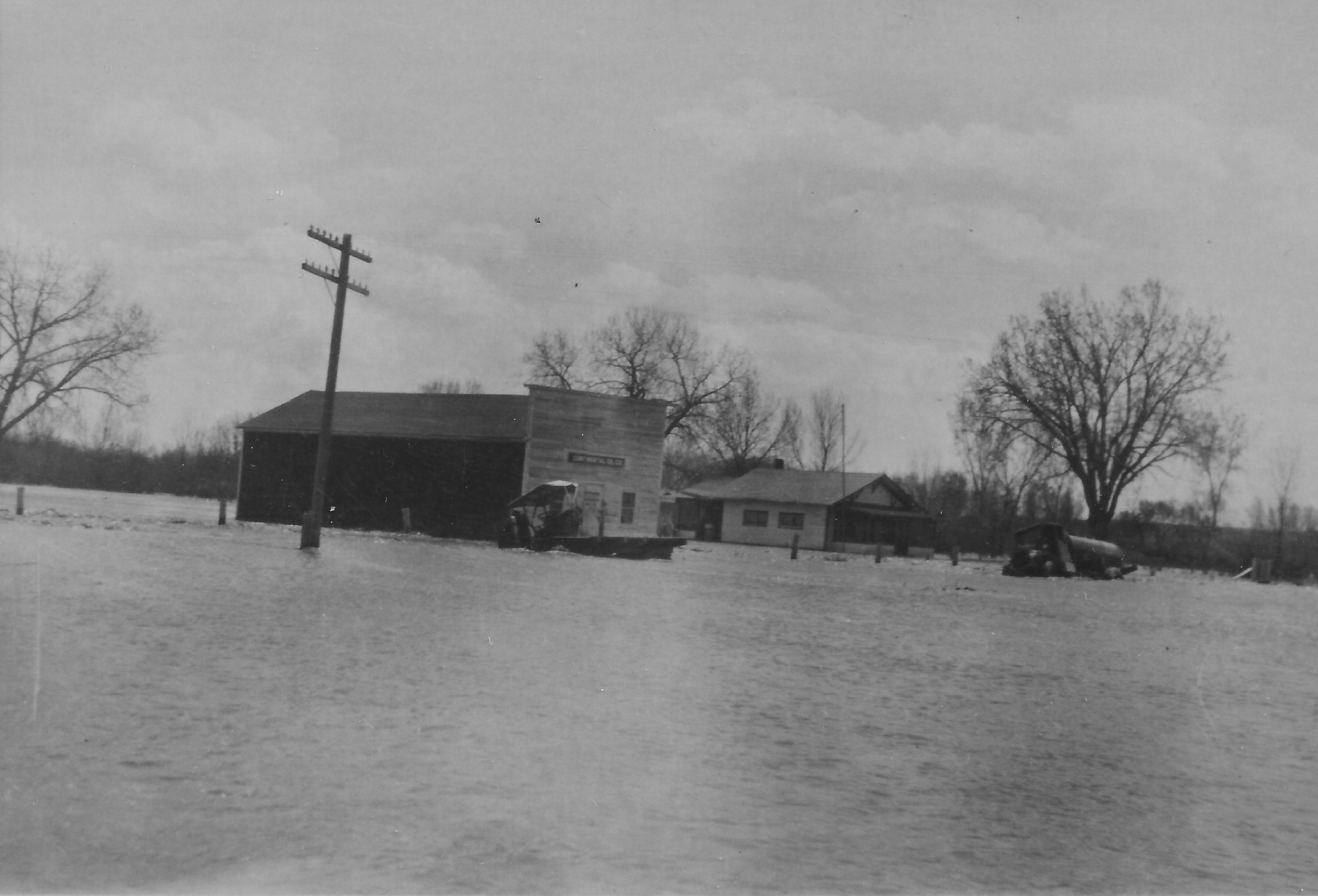
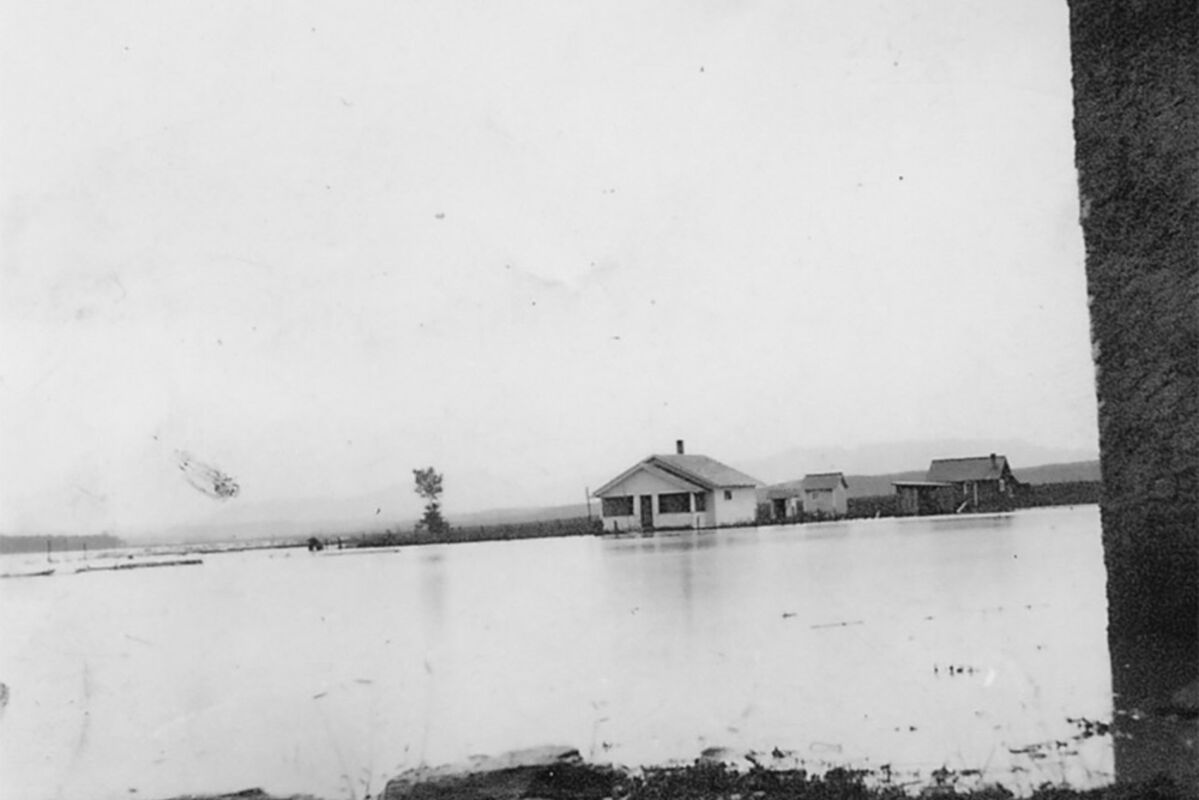
Sept 23 1923, Powder River flooded. It was a disastrous flood, and many Kaycee residents lost their homes.


This is the Kaycee Livery Barn and corrals in the 1930's. It is south of the Ritter house, which is today the Cassidy Inn, which is operated by the grandson of Judd Ritter, Rome Taylor.
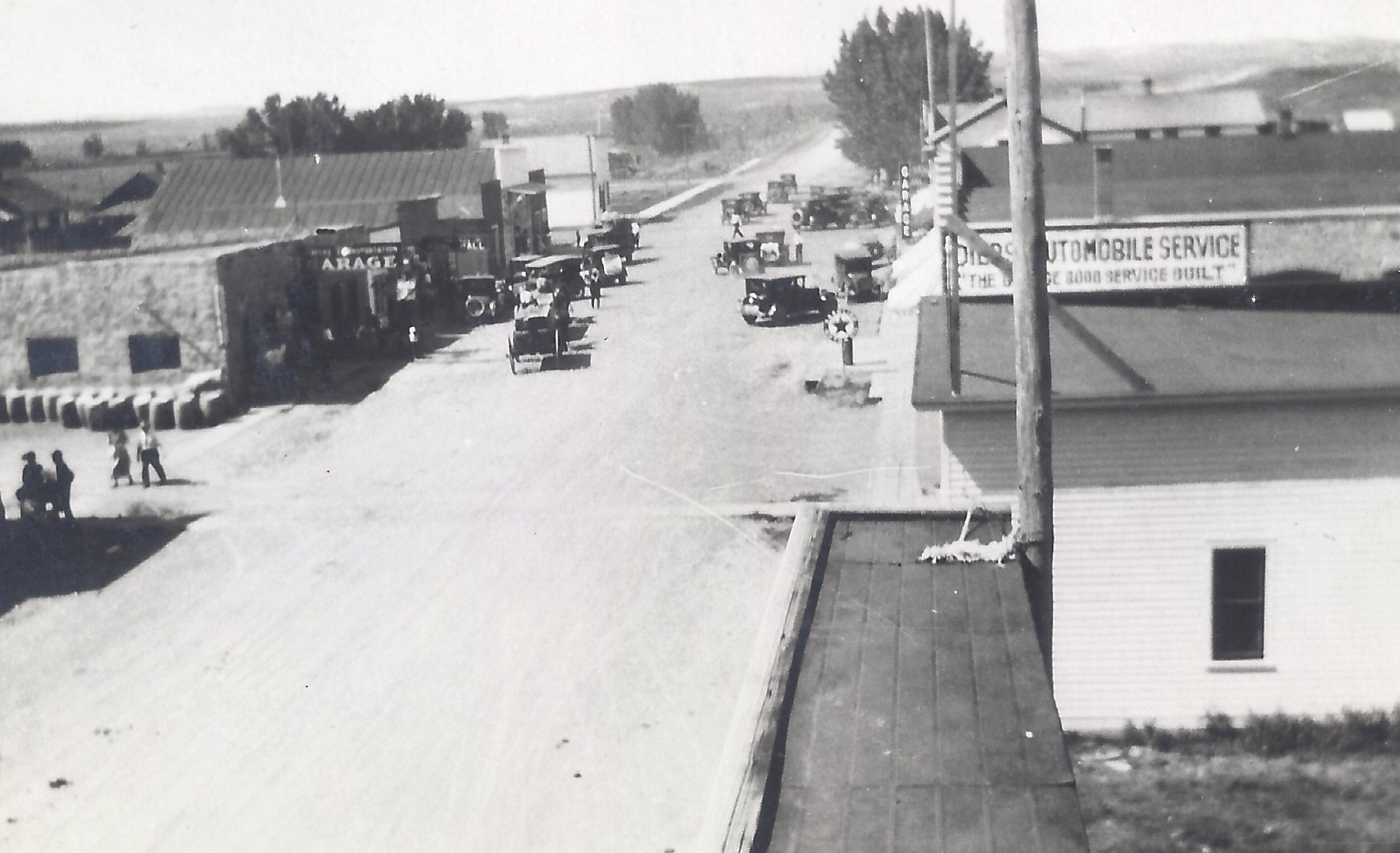
April 8 1925, the Kaycee Town Council passed an ordinance regulating
rooming houses to prevent vice, immoral, and disorderly conduct.
This photo was taken on top of the Galt Store in 1923 looking North
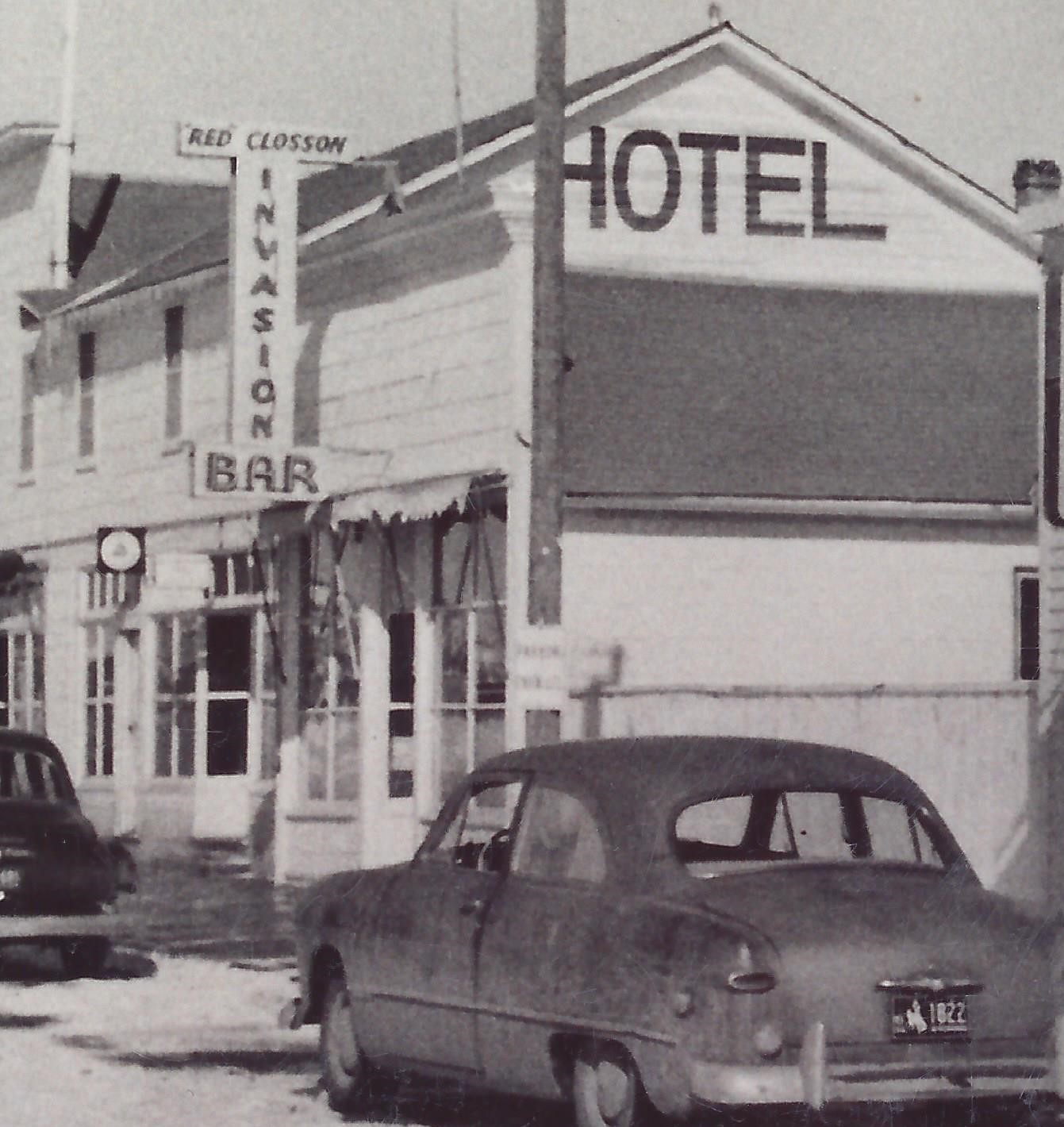
On Dec 13th in 1963, a fire occurred which destroyed the Feedrack
Hotel and Cafe (previously known as the Kaycee Hotel), and the Invasion
Bar. The fire occurred on a very cold night during a basketball game,
and everyone left the basketball game at the school to go fight the
fire, but the buildings could not be saved. According to an old time
Kaycee local, an arsonist lived in Kaycee and several other buildings
along with the Jack Flagg Bridge, were also burned. After he moved away
the fires stopped, and he was later arrested in another town for arson.
This building is not the same Feedrack Cafe, located further north
on the street, which operated for a decade or so before the flood of
2002. Gary Yeigh states:The fire actually started from a grease fire in
the restaurant, it wasn’t arson. Kaycee won the state championship that
year. They were playing Tensleep that night and the game was so
contentious that Tensleep walked out at halftime.
April 4 1915 H.A. Smith arrived in Kaycee with a large team and loads of freight for the Kaycee Mercantile. It was a large enough team and load that it prompted someone to take this photo, luckily for us. 1915 Picture of Kaycee Mercantile. Bill Stubbs and Alice Ullery Stubbs owned the Kaycee Mercantile in early 1920‘s. Samuel and Clara Ullery resided in the lean-to on the north side of the building for a short time while they filed on their homestead at Nine Mile. This is now the Hoofprints of the past Museum.

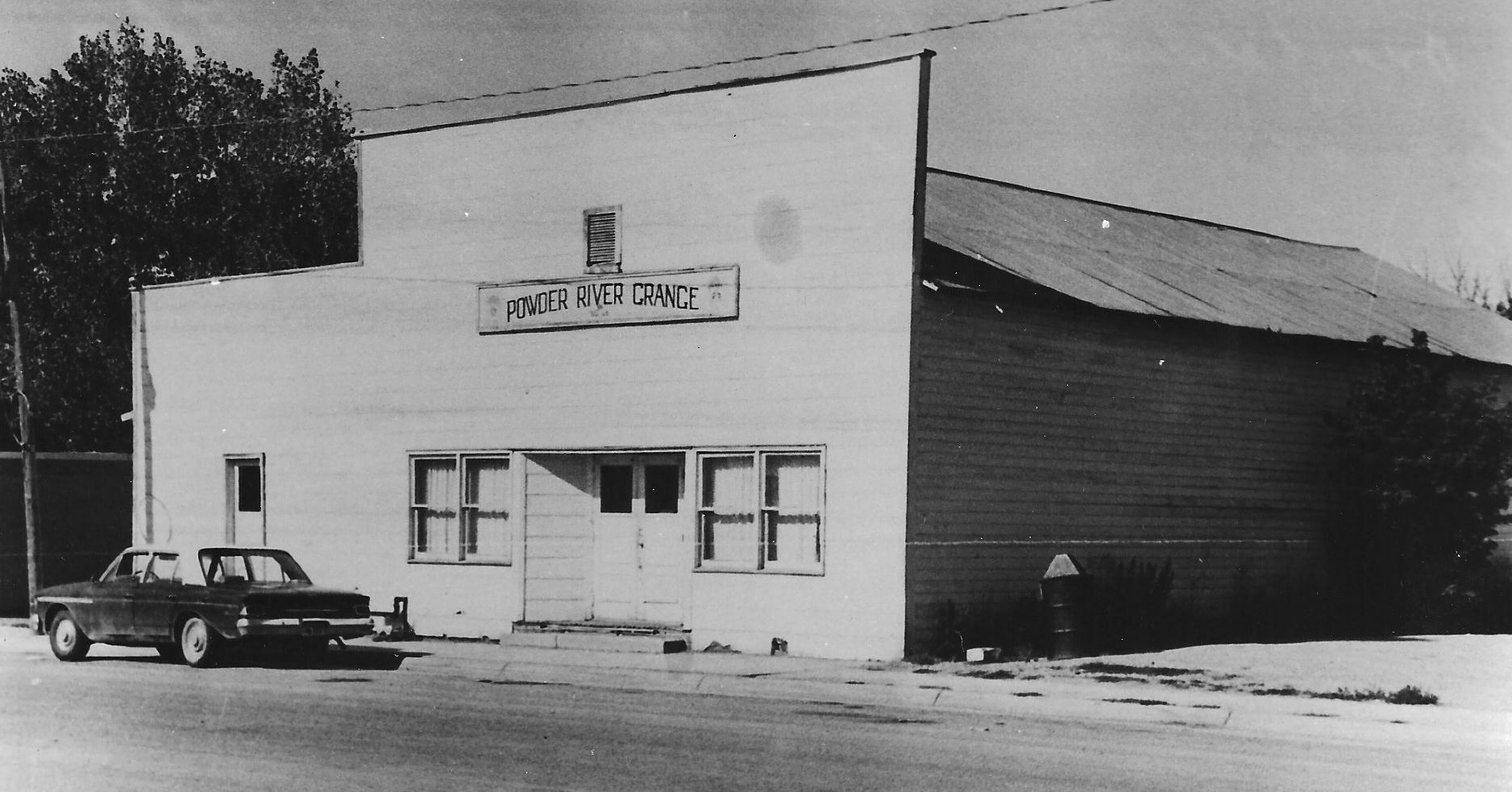
On this date in 1943, the Powder River Grange No. 68 bought the 1897 building in Kaycee which had been a general mercantile store that was no longer in business. Under Grange ownership, it was used by the Grange, and for many community functions. Hoofprints of the Past Museum bought the building in 1989 in order to establish a museum. It has been through many changes over the years, but the original building, down to the massive log walls, still stand. We hope to continue for decades more and look forward to the new year and future ahead.
Hoofprints Museum Kaycee Wyoming

In 1897, George Peterson built one of the first buildings in Kaycee, the KC Saloon, after convincing Jesse Potts to sell him logs intended for Pott's blacksmith shop. Peterson owned and ran a variety of businesses in Kaycee over the years. He married Eliza Bridger, the great niece of the famous scout Jim Bridger.
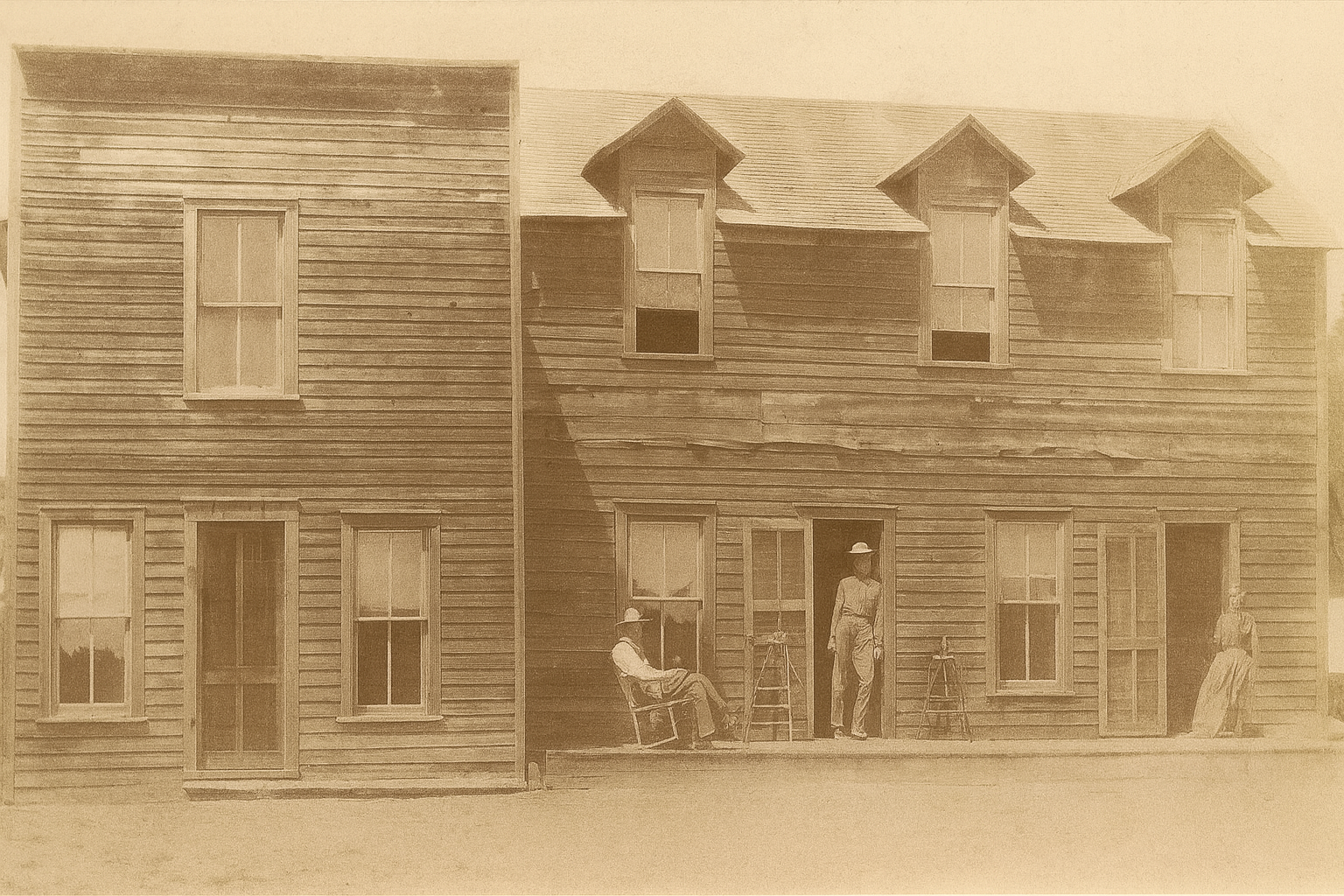
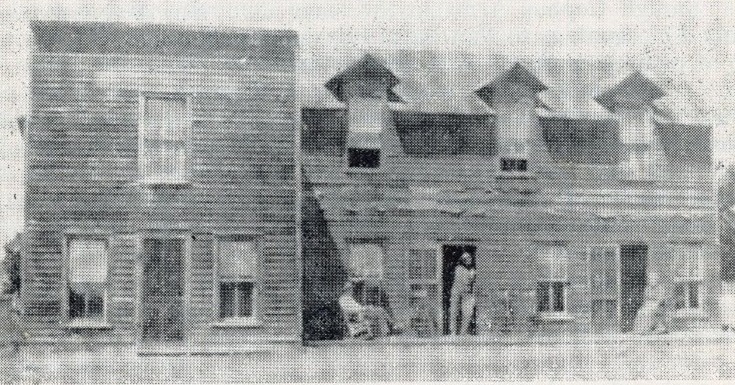 This
is an early photo of the Kaycee Hotel, which was owned by the John Young
at the time, but by many people over the years.
This
is an early photo of the Kaycee Hotel, which was owned by the John Young
at the time, but by many people over the years.
Source: Annals of
Wyoming, Thelma Gatchell Condit
image cleared with photo editing:
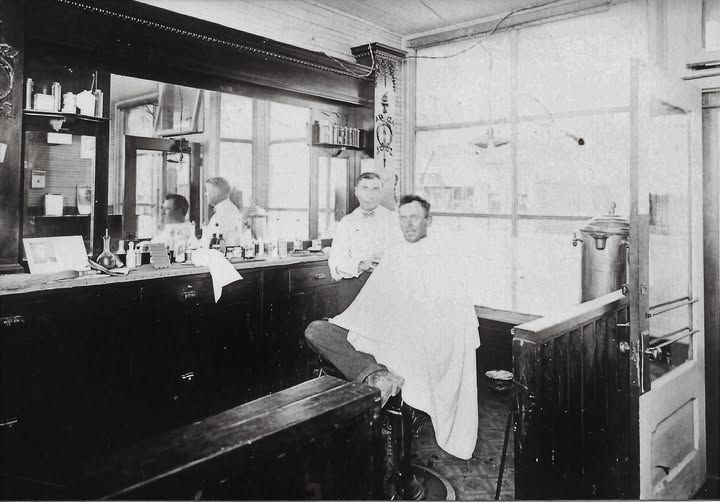
There was a barbershop in the Kaycee Hotel at one time. George Diekens was the barber, and Earl Sutton was the customer in this photo
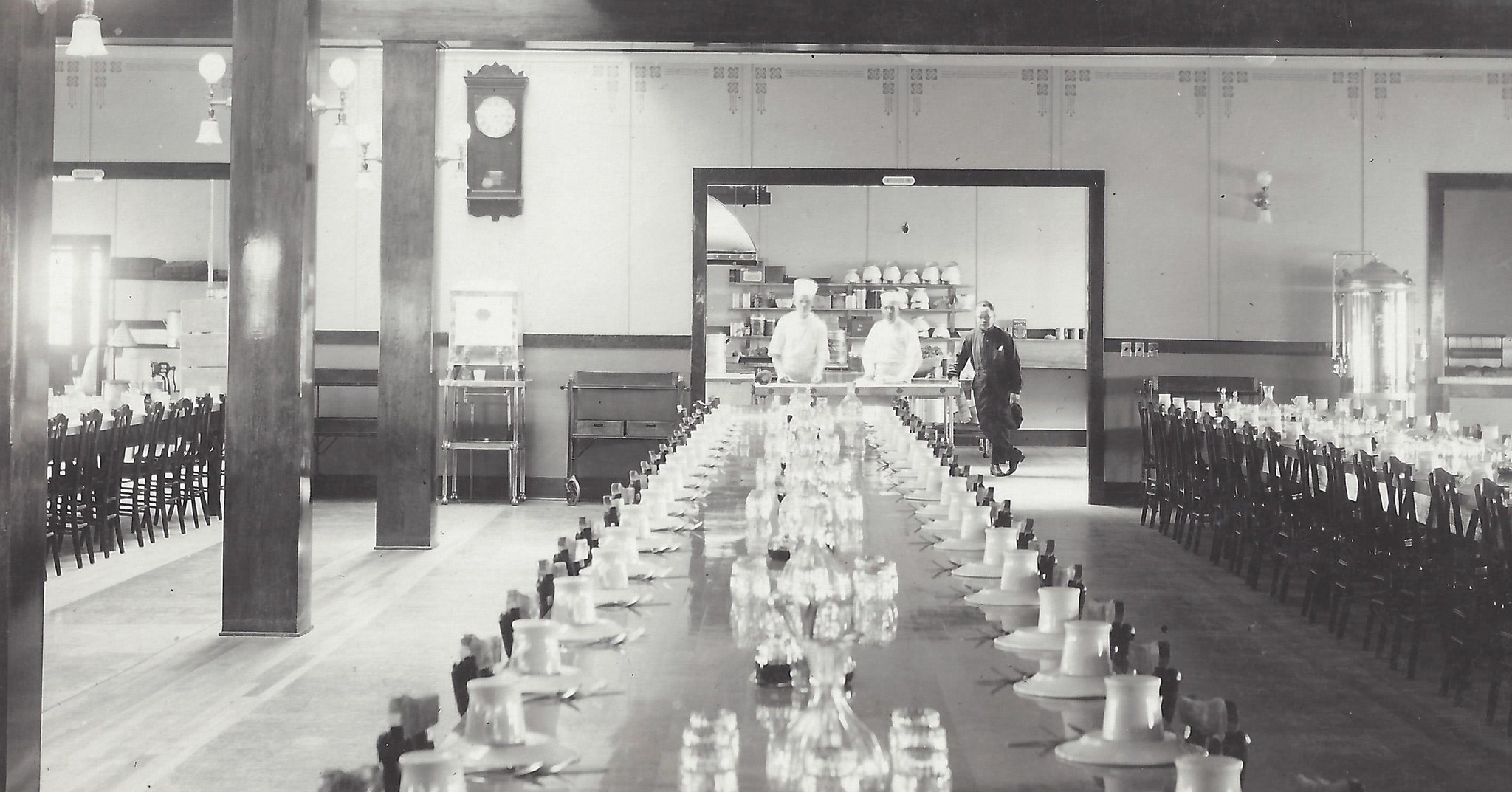
On Feb 19 in 1921, the Salt Creek Hotel and
Boardinghouse opened in Midwest, Wyoming with a dinner and dance. Over 950
people attended.
Kaycee's neighbor sits on some of the richest oil land
historically and has been pumping oil for over 100 years, drawing many Kaycee
residents to work there even today.
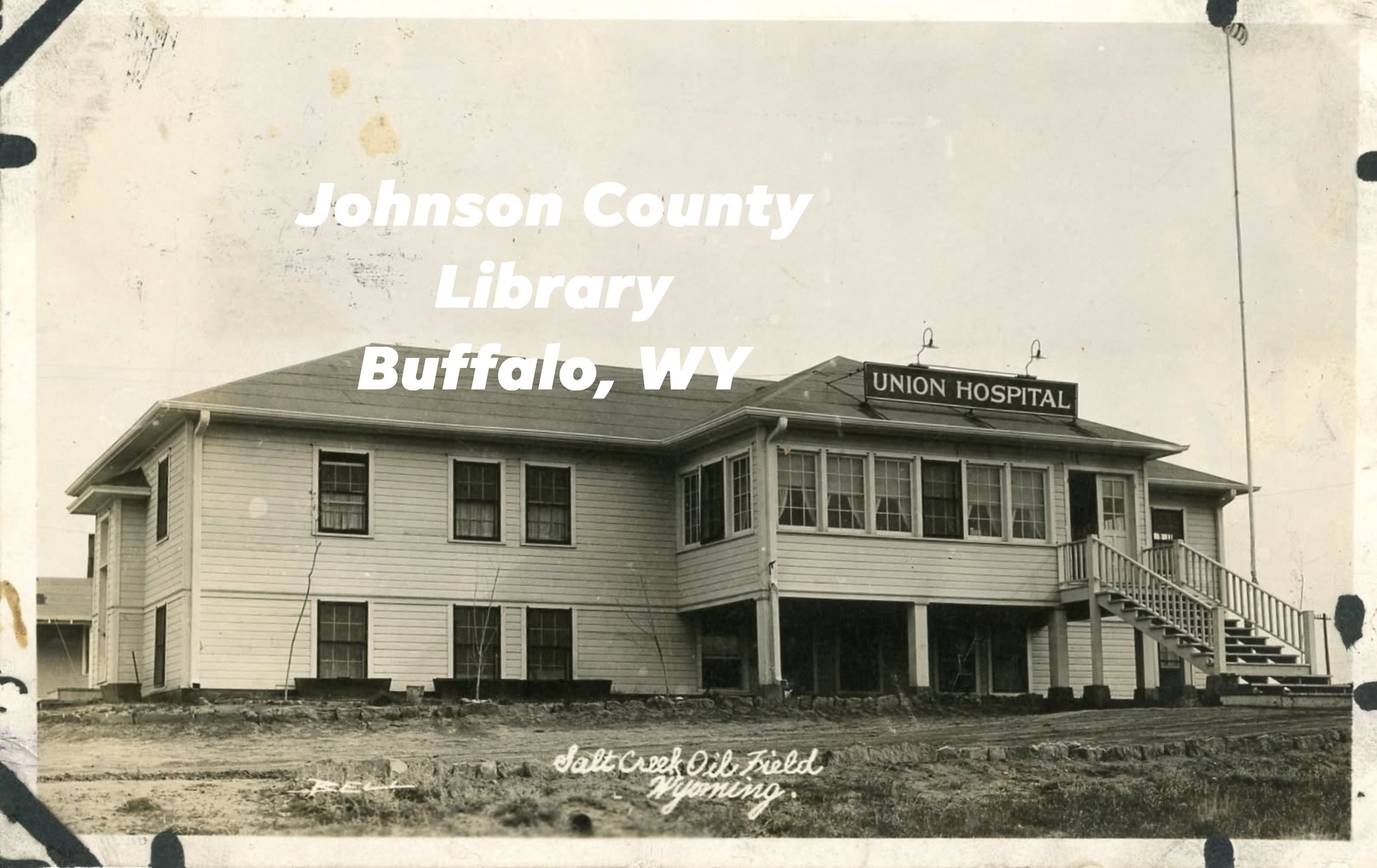
Union Hospital Salt Creek Oil Field Wyoming
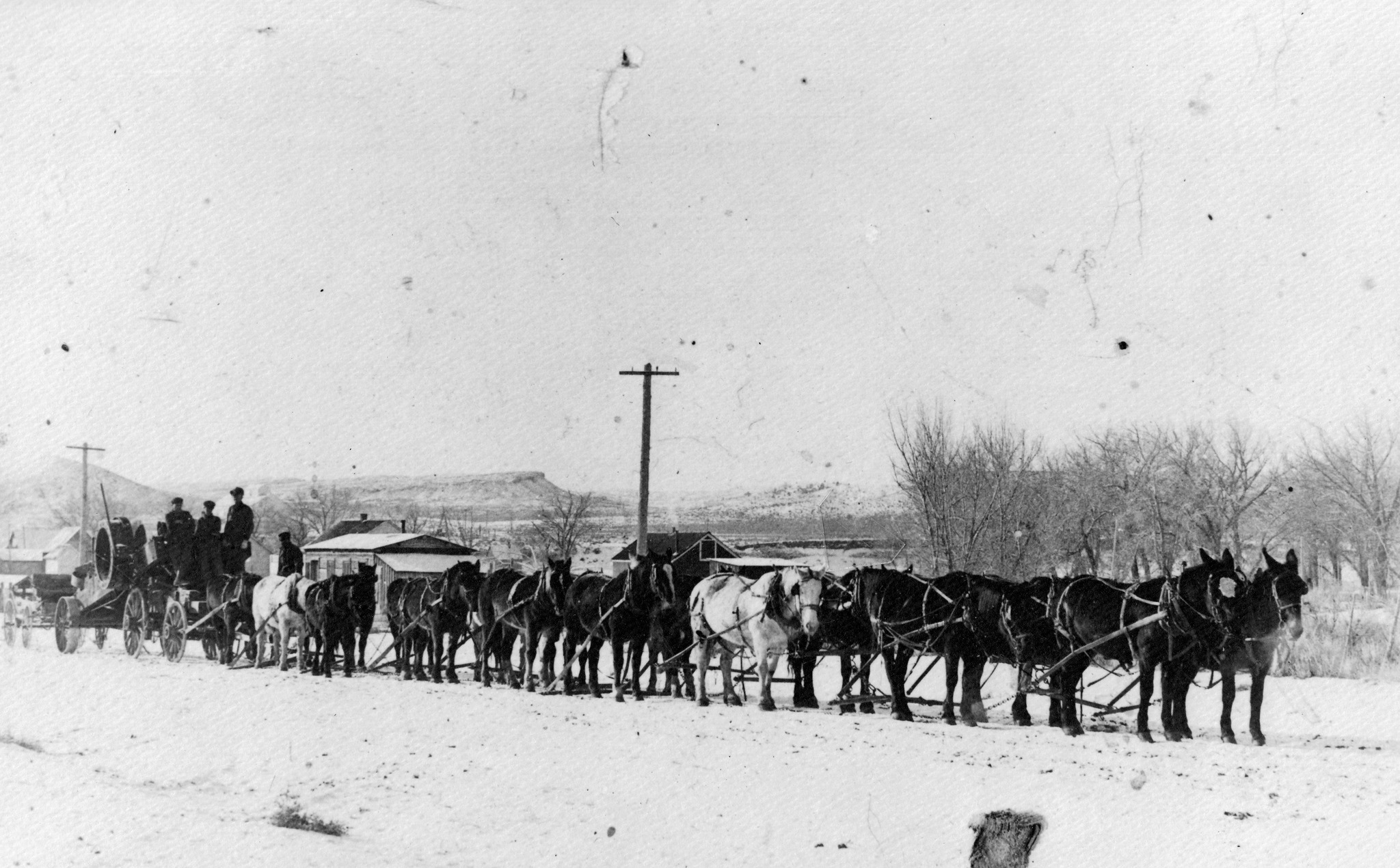
This is a string team hauling equipment on a snowy day in Kaycee in the early 1900's. Gilford James, Leo Gosney, John Rosenberg, and Ray Gosney are named on the photo.
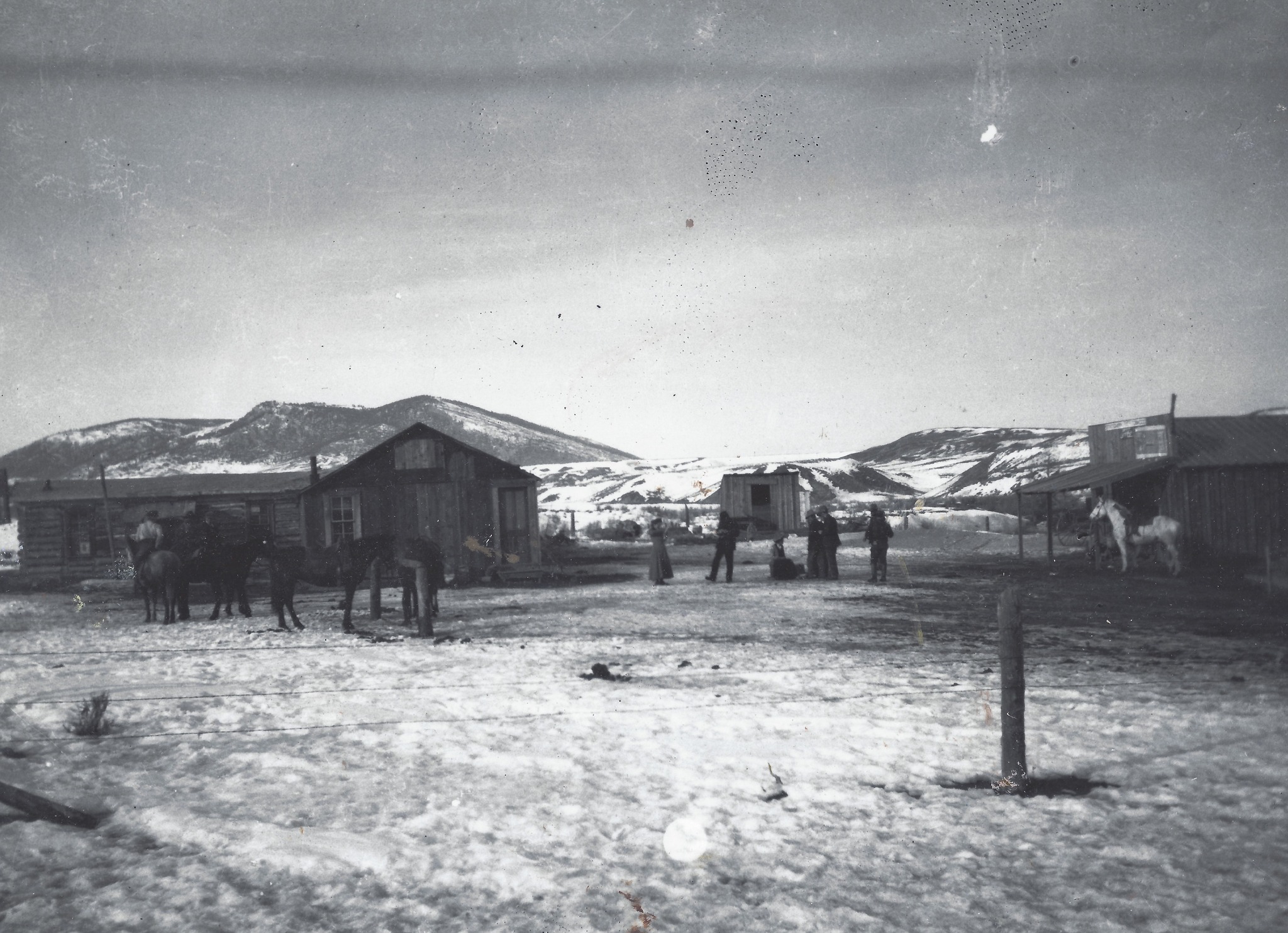
This photo is the Mayoworth Store and Post Office, located 11 miles west of Kaycee. The Horn can be viewed in the background. The history of the Mayoworth store and post office is as follows: In 1902, Mr. Manase became the first post master and later Mr. Cooper, Ben Gallinger, and James Sellars. During Cooper’s term, the Mayoworth dance hall was added to the log residence. Dances were held monthly with Mr. Simmons playing his famous fiddle. While James Sellars was postmaster he converted the hall into a store and Post Office. He needed more space for a store, as he had developed a thriving business (Sellars would later open a store in Kaycee on the lot North of the current museum). Many sheep outfits stopped at the Mayoworth Store for supplies and salt on their way to summer camps in the mountains. James Rinker followed Sellars as postmaster, then came Irene Dalzell and Erma Carr who served from 1929-1944 when the Post Office was discontinued. There was also a stage stop at Mayoworth for a short time and a school nearby to serve the Mayoworth Community which operated until approximately 1955.
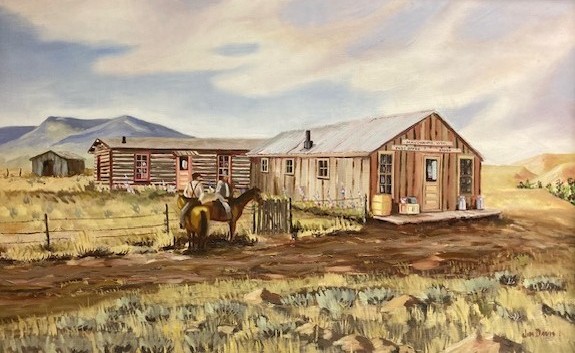
J.K. Davis painting from the museum of the Mayoworth Store and Post Office
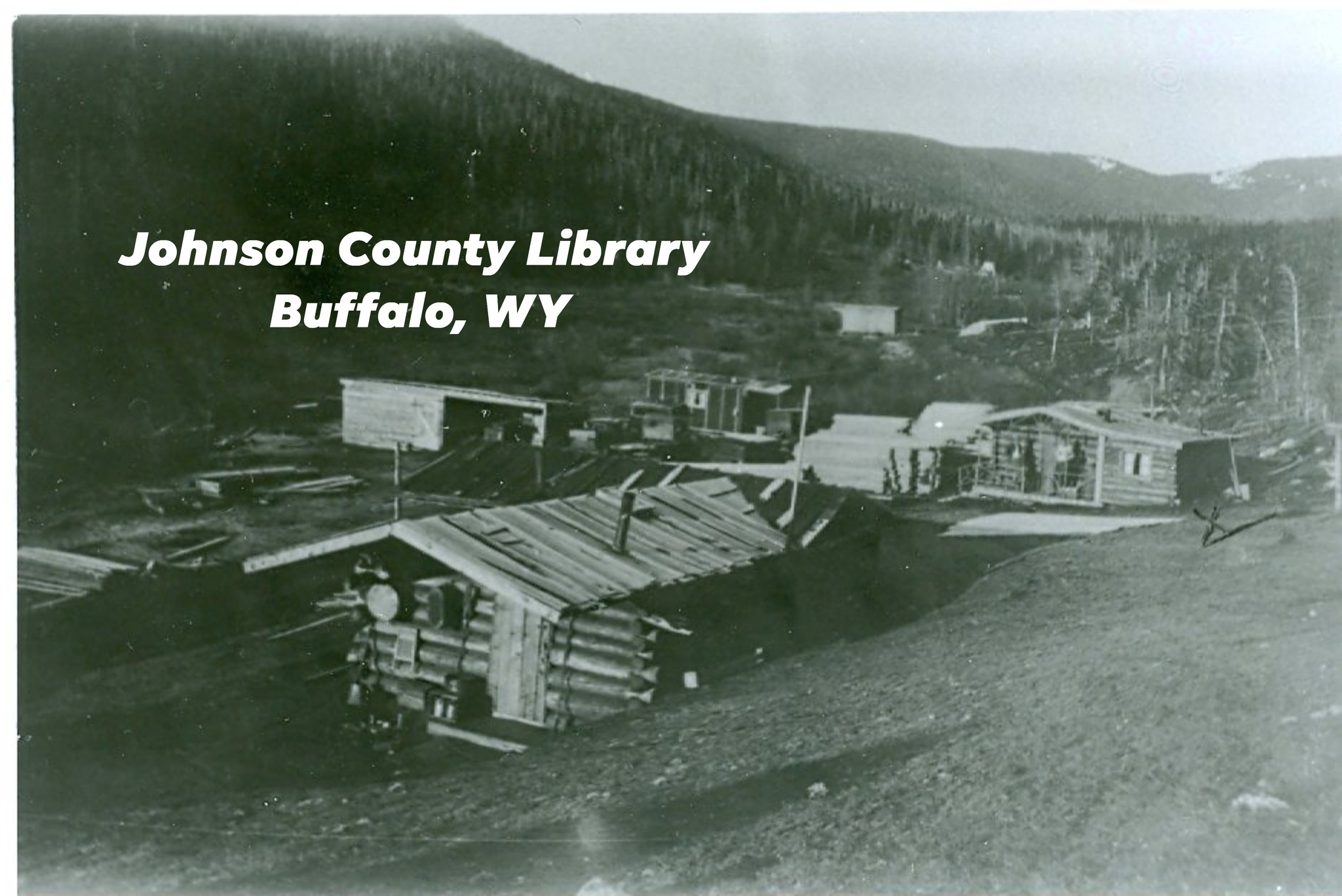 Sourdough Camp Abernatha's first home on Sourdough (right), Shosten
Cabin (left)
Sourdough Camp Abernatha's first home on Sourdough (right), Shosten
Cabin (left)
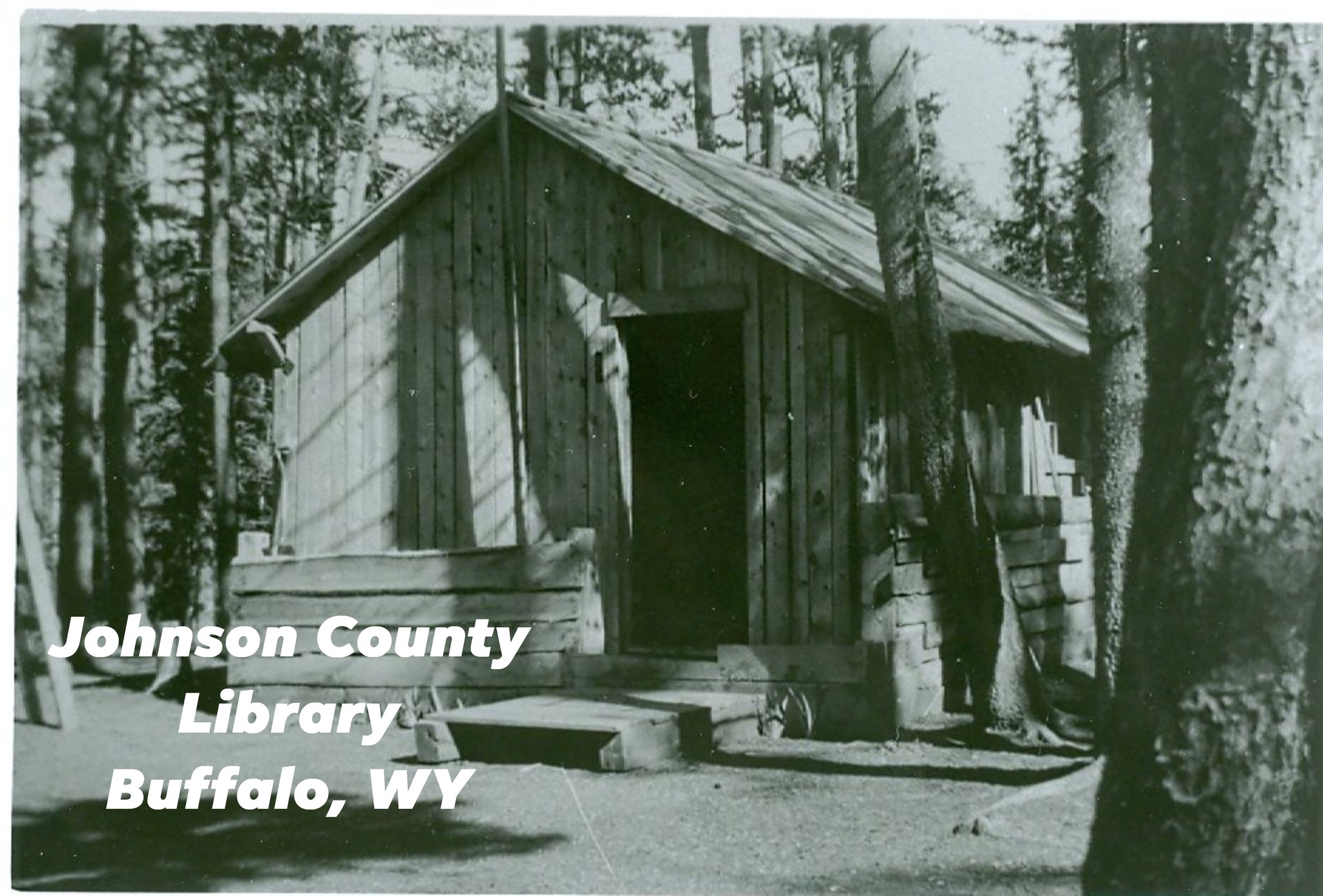 Jess Smee cabin at Sourdough
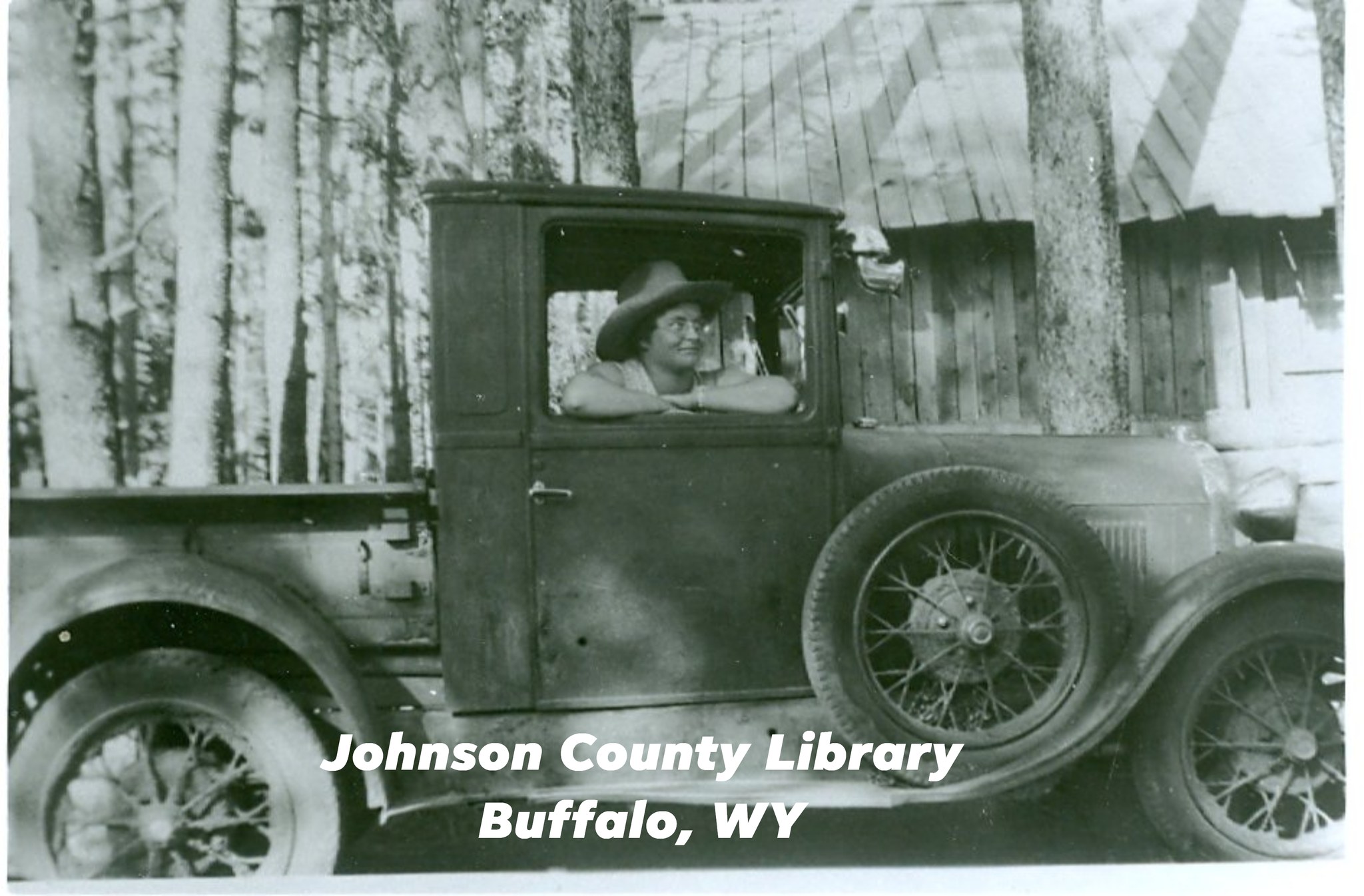 Ruth Smee
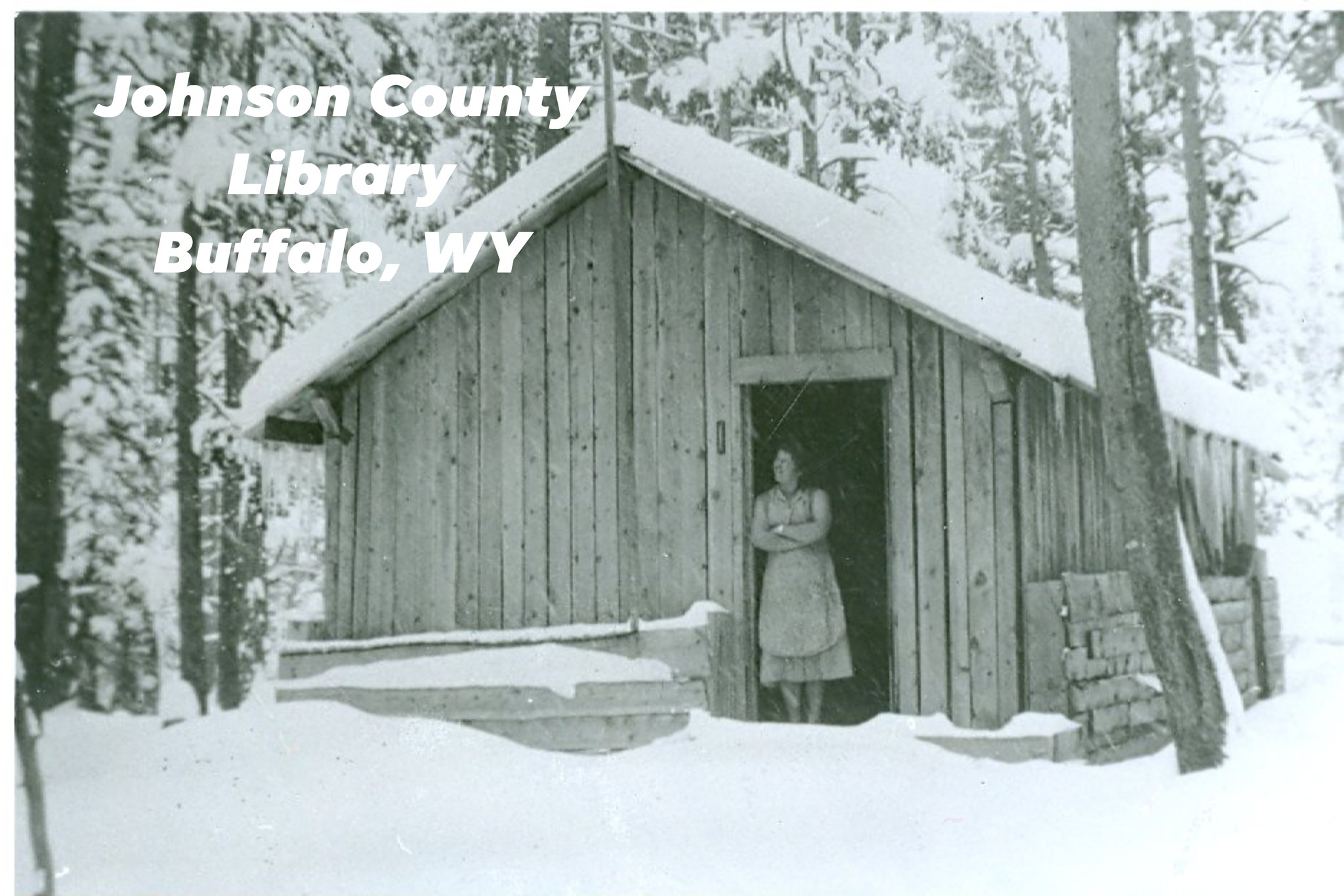 Amy Smee
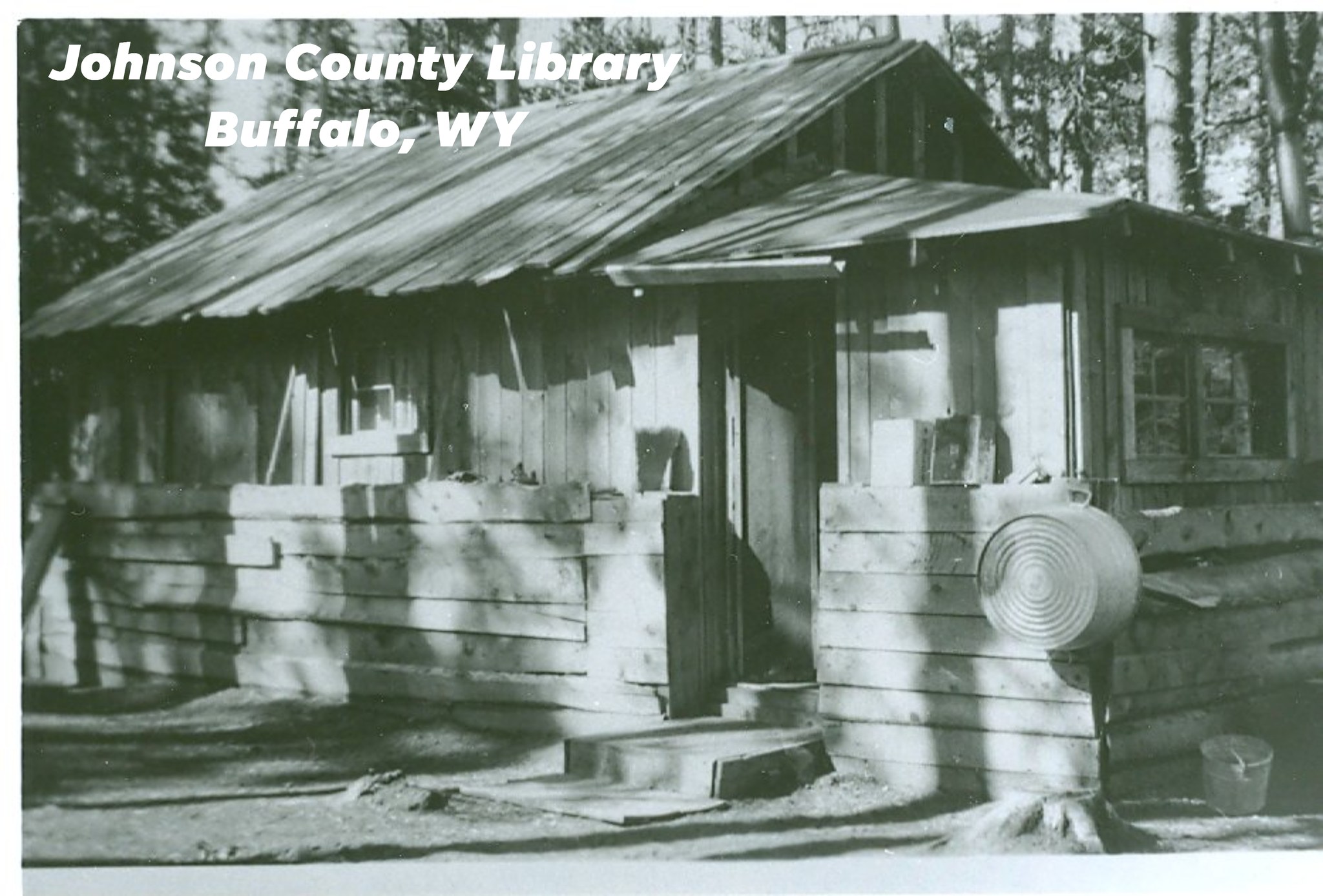 1938 cabin at Sourdough
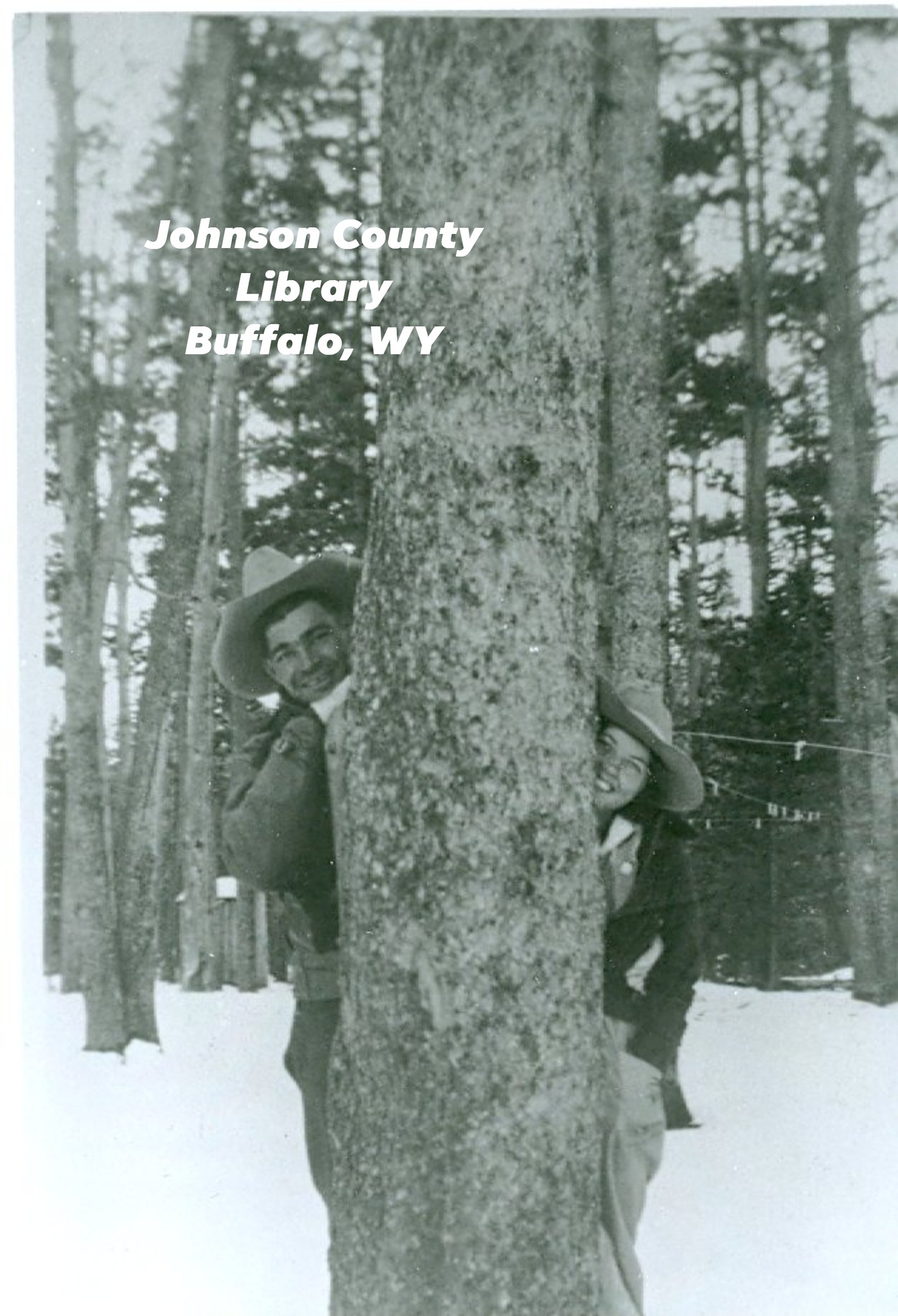 Bill and Amy Smith
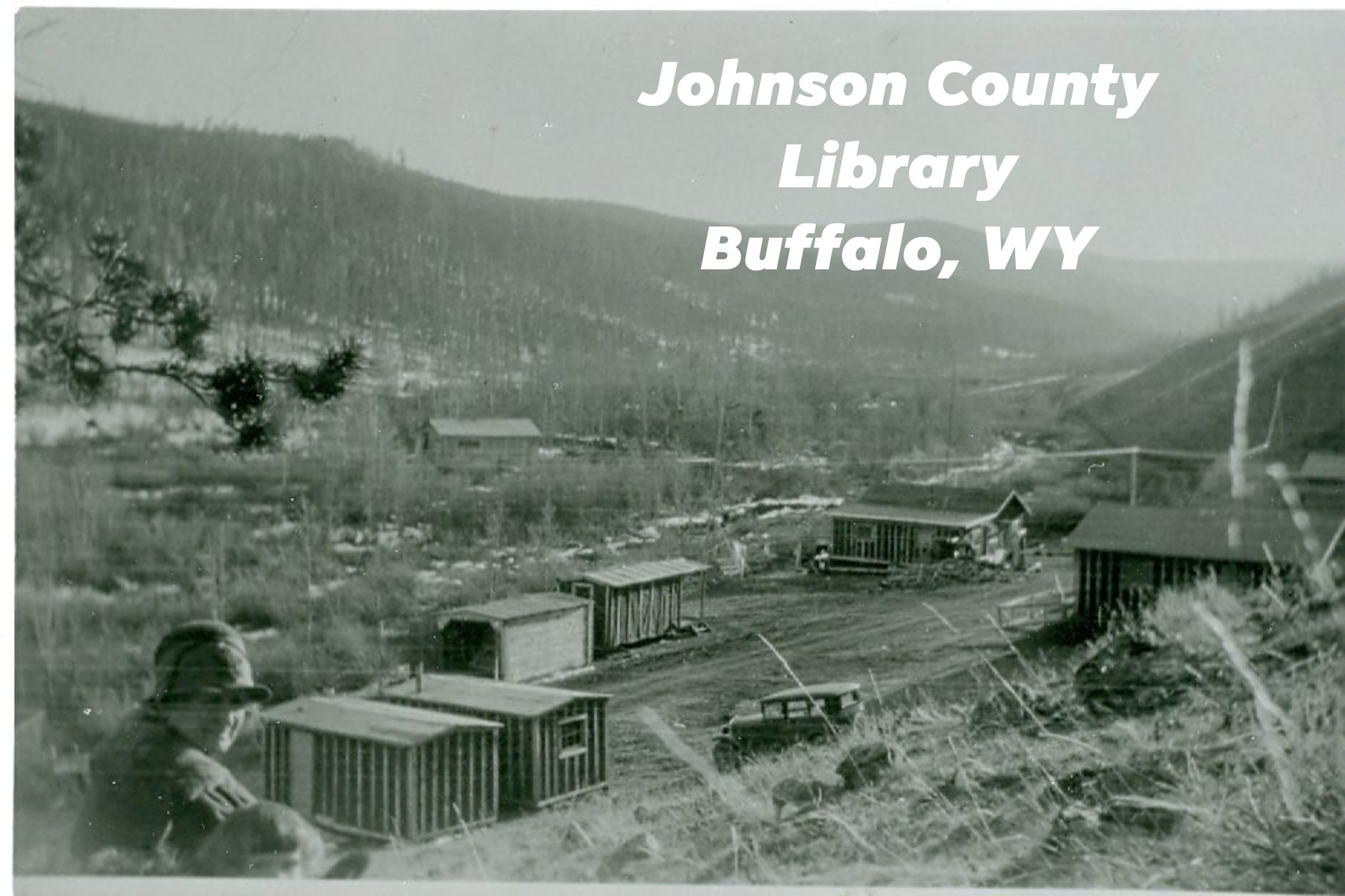
Logging Camp #1
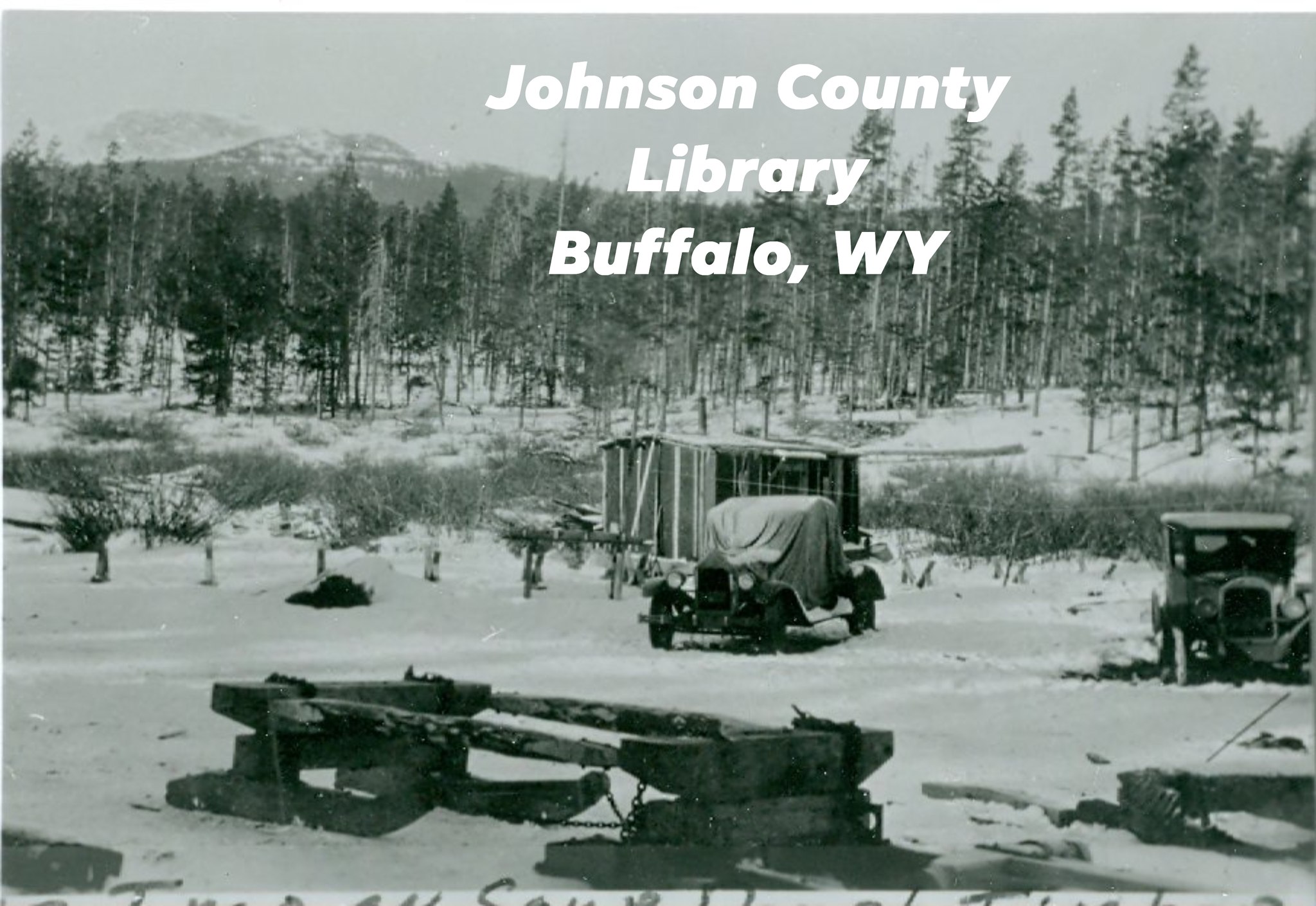
Camp #2 on Sourdough Timber
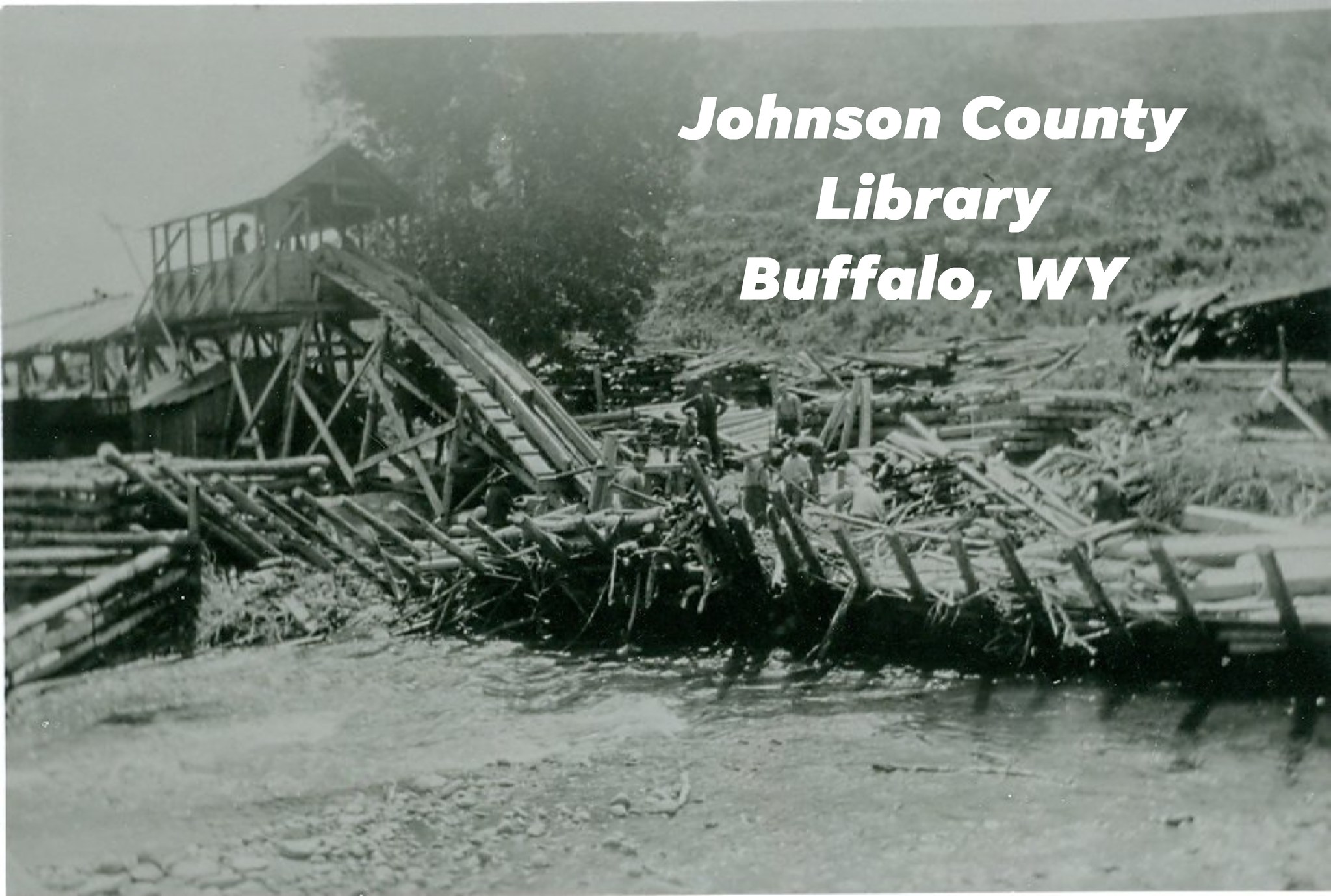 Sawmill on point at Camp #2
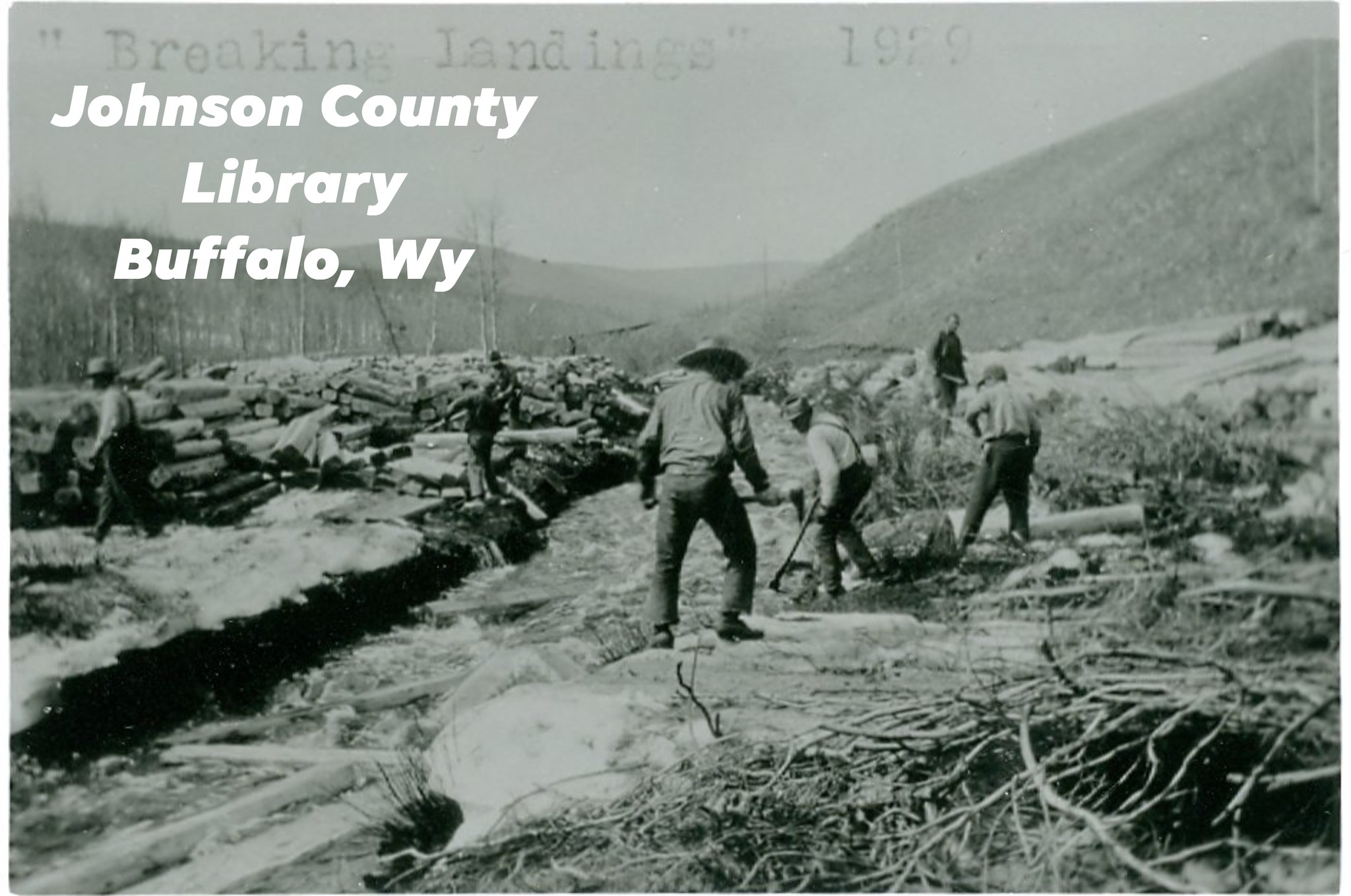
Sourdough 1929 - "breaking landings" men moving logs in stream
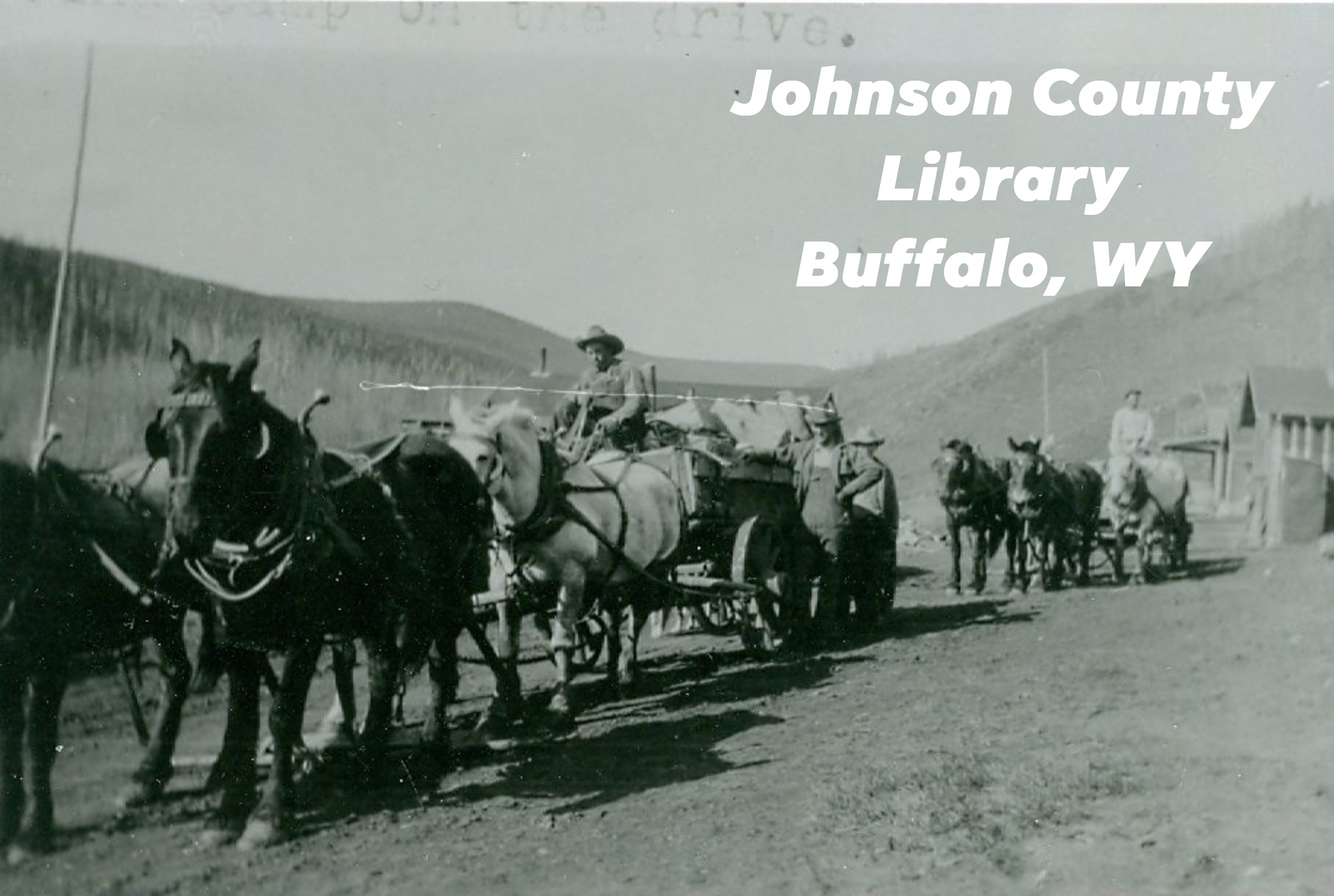
Bill Shosten and teams on Tie drive moving camp

Gibbs Family collection is of Sussex, Wyoming, building identified as
the Old Sussex Hotel.
The community of Sussex is located in Johnson
County east of Kaycee. The Sussex Post Office was located on the old
Spectacle Ranch and named by Mrs. Henry Winter Davis for her hometown of
Sussex County, Delaware, according to the Wyoming Places Database. It
operated in Sussex from 1895 until it was discontinued in 1963
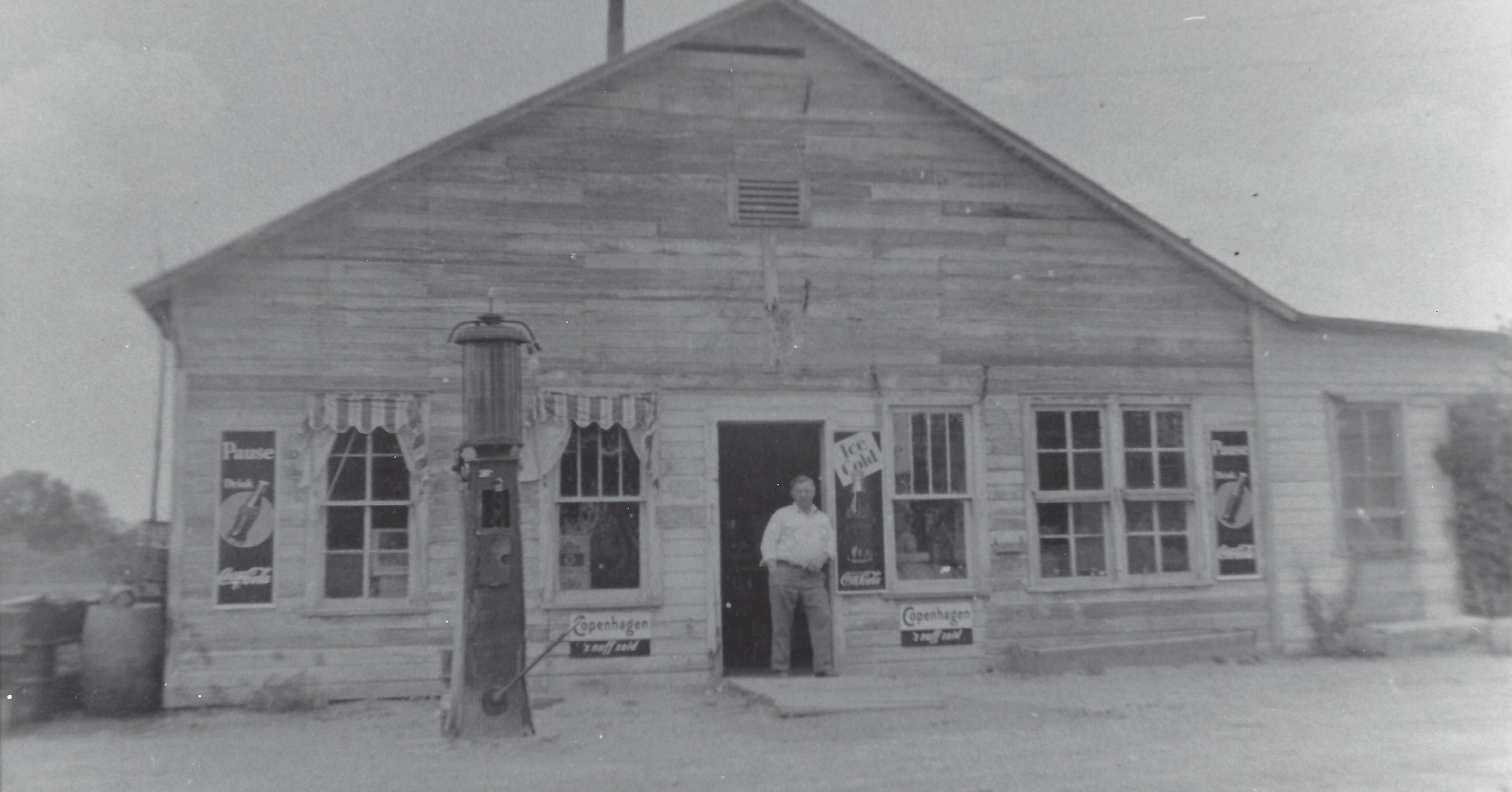
Sussex Store, with Sidney Gering in the doorway. He was married to Netty Leggett, daughter of O.A. Leggett, who ran the flour mill in Kaycee
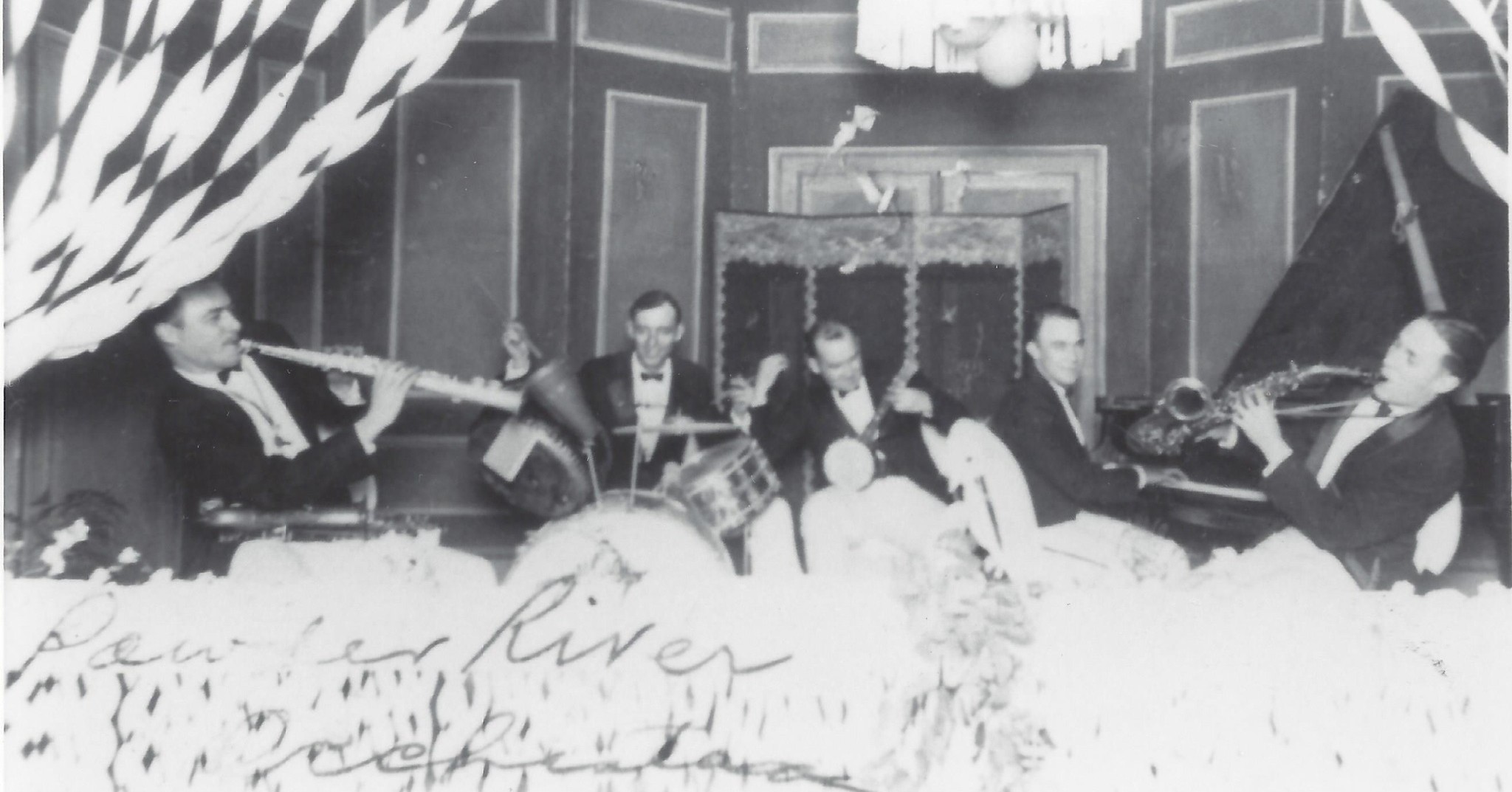
Powder River Orchestra, which played at Sussex Community dances
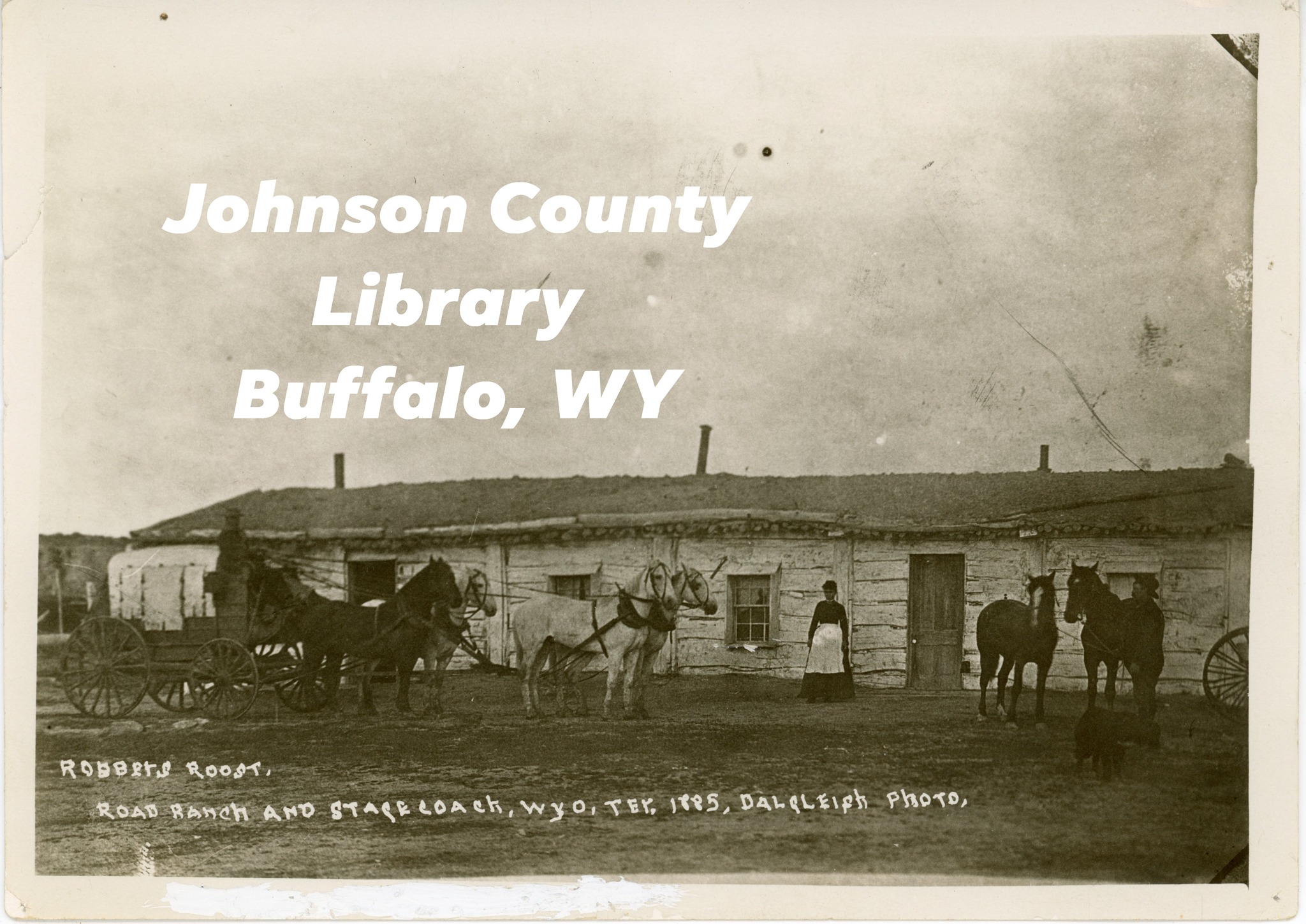
Robbers Roost Wyoming Territory 1885 Road Ranch and Stagecoach Ross, Wyoming at the Head of Dry Fork of Powder River.
If you have questions, contributions, or problems with this site, email:
Coordinator - Rebecca Maloney
State Coordinator: Rebecca Maloney
Asst. State Coordinator: Bob Jenkins
If you have questions or problems with this site, email the County Coordinator. Please to not ask for specfic research on your family. I am unable to do your personal research. I do not live in Wyoming and do not have access to additional records.